
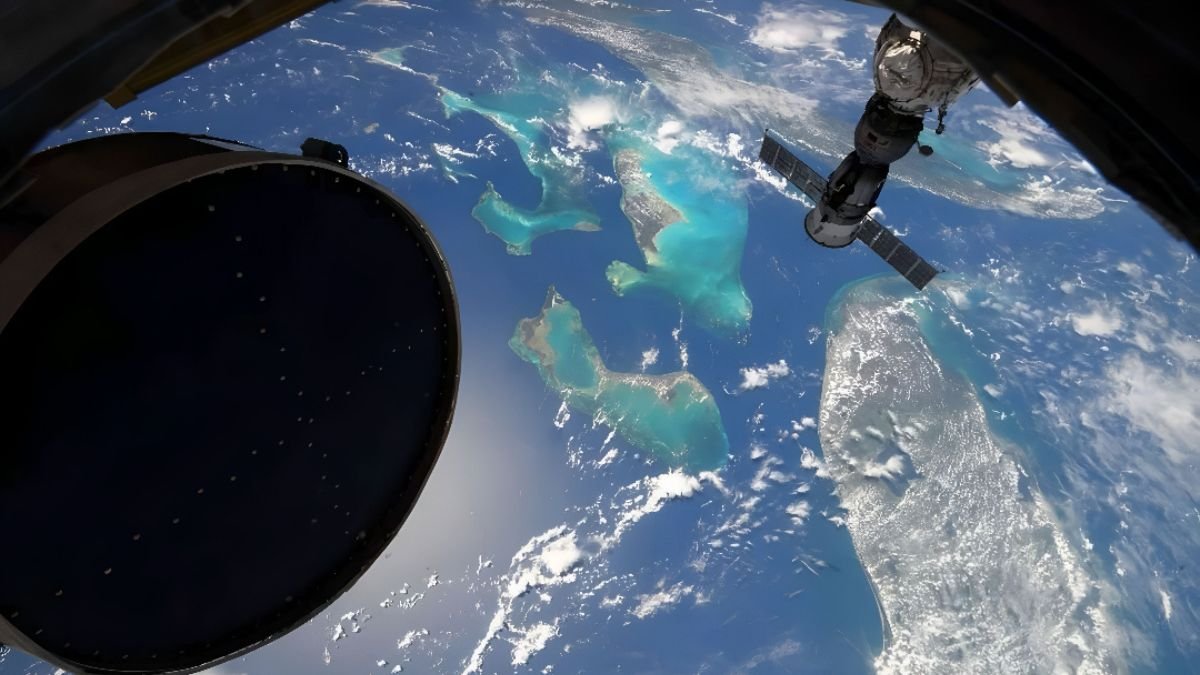
A significant space incident occurred when a large NASA spacecraft re-entered Earth’s atmosphere several years earlier than expected. On Wednesday morning, the defunct spacecraft plummeted toward Earth at high speed, and upon entering the atmosphere, most of it burst into flames.
Scientists believed, however, that some small parts of the spacecraft might have survived, rather than being completely destroyed. According to the space agency, this was not a controlled return, but rather a natural fall of the spacecraft out of orbit and into Earth’s atmosphere.
In such incidents, most debris typically burns up, making it very unlikely to reach Earth. However, scientists continuously monitor such incidents to identify any potential hazards in time.
What was the likelihood of injury from debris?
According to NASA, the likelihood of a person being harmed by spacecraft debris in this incident was approximately 1 in 4,200. According to scientists, this risk is considered very low and a relatively safe situation compared to some previous incidents.
Darren McKnight, an expert on space debris, said that many spacecraft have previously entered Earth’s atmosphere with risk estimates of up to 1 in 1,000, yet no major incidents occurred. Therefore, such incidents are viewed as a normal scientific process.
However, in some cases, the risk is even lower. For example, in the event of the Chinese space station Tiangong-1 falling to Earth in 2018, the probability of harm to a person was estimated at approximately 1 in 1 trillion.

Which spacecraft fell to Earth?
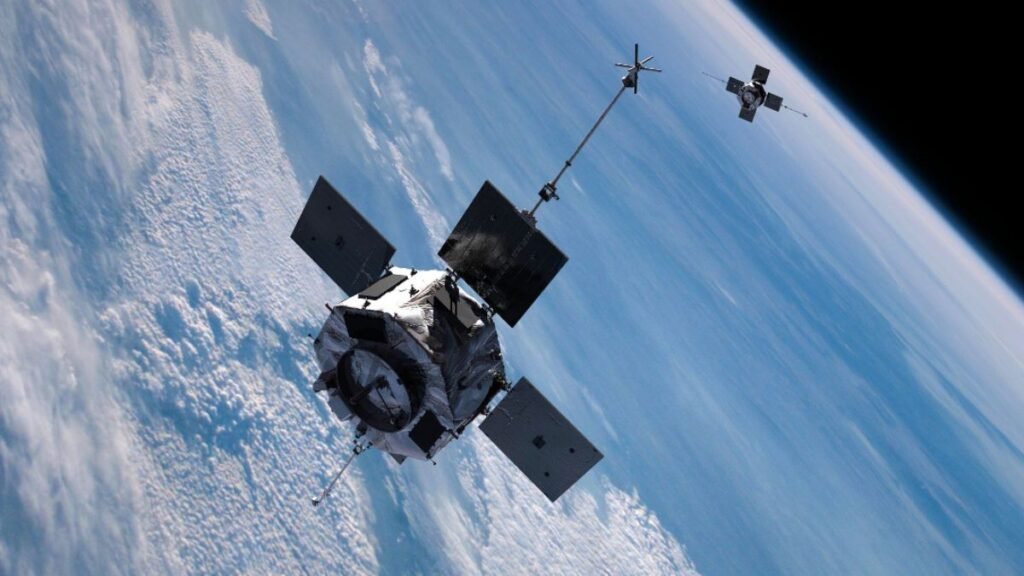
The spacecraft that returned to Earth’s atmosphere was the Van Allen Probe A. It was a scientific spacecraft weighing approximately 600 kilograms (about 1,323 pounds) and launched in 2012.
The primary objective of this spacecraft was to study the radiation belts surrounding Earth. This mission actually began with two spacecraft—Van Allen Probe A and Van Allen Probe B.
These two spacecraft spent several years in space, gathering vital scientific information. Their original mission was for a few years, but they remained active longer than expected, sending data to scientists until 2019.
Why the Van Allen Radiation Belts Are Important
The study area of these spacecraft was the Van Allen radiation belts. These are two vast layers of high-energy particles surrounding Earth, trapped in Earth’s magnetic field.
These radiation belts play a vital role in protecting Earth from many dangerous cosmic influences, including cosmic radiation, solar storms, and the constant solar wind from the Sun.
Scientists believe that a better understanding of these belts is essential because they not only affect the safety of life on Earth but also affect satellites and space technology.
During the Van Allen mission, scientists made several important discoveries, including the discovery that a temporary third radiation belt can sometimes form during intense solar activity.
When and where did the spacecraft fall?
According to astrophysicist Jonathan McDowell, the spacecraft entered Earth’s atmosphere at approximately 6:37 a.m. Eastern Time on Wednesday.
According to available data, the incident occurred in the equatorial region of the Pacific Ocean. The location was reported to be around the sea area south of Mexico and west of Ecuador.
There were no reports of any debris or injuries immediately following the incident. This suggests that most of the debris likely burned up in the atmosphere.
Why the Spacecraft Returned Earlier Than Expected
NASA scientists initially predicted that the spacecraft would remain in Earth’s orbit until approximately 2034. However, this did not happen, and it returned to Earth’s atmosphere several years earlier.
A major reason behind this is believed to be increased solar activity. In 2024, scientists confirmed that the Sun had reached its solar maximum phase. During this time, solar activity increases and space weather becomes more active.
Under these conditions, the friction in Earth’s upper atmosphere increases, causing orbiting satellites and spacecraft to gradually slow down and become increasingly pulled toward Earth.
The Growing Problem of Space Debris
The problem of space debris has been growing steadily over the past few years. Experts say that thousands of defunct satellites and rocket parts remain in space, posing a potential collision risk in the future.
According to Marlon Sorge, an expert on space debris, awareness of this problem is now greater than ever before.
Today, many space agencies and private companies are attempting to design their satellites so that they completely burn up upon returning to Earth’s atmosphere, without any fragments reaching the ground.\

Recent Space Debris Incidents
In recent years, several incidents have highlighted the dangers of space debris. In 2024, a piece of metal ejected from the International Space Station did not completely burn up after entering Earth’s atmosphere and damaged the roof of a house in Florida, USA.
In addition, parts of rockets from private space companies like SpaceX and Blue Origin have also been found on beaches or land in various parts of the world.
Conclusion
The return of NASA’s Van Allen Probe A to Earth was part of a scientific process, but this incident has once again drawn attention to the growing threat of space debris.
Although no damage was caused this time, finding a solution to this problem will become even more urgent as space activities expand in the future. Scientists and space agencies are now developing new methods to safely destroy defunct spacecraft and protect Earth and active satellites in orbit from potential threats.
FAQs
Q. Which NASA spacecraft reentered Earth’s atmosphere?
A. The spacecraft was NASA’s Van Allen Probe A.
Q. When did the spacecraft reenter Earth?
A. It reentered Earth’s atmosphere early Wednesday morning.
Q. Was anyone injured by the falling debris?
A. No injuries or damage were reported.
Q. Why did the spacecraft return earlier than expected?
A. Increased solar activity caused higher atmospheric drag, pulling it out of orbit sooner.
Q. What was the mission of the Van Allen Probes?’
A. They studied Earth’s Van Allen radiation belts and space weather effects.
Leave a Reply