

In American politics, events often unfold that are not confined to a single issue but instead impact the entire political landscape. The recent controversy surrounding the Epstein files is one such instance. During the 2024 election campaign, Donald Trump pledged that, should he return to power, he would make these files public so that the truth could be revealed to the public. At the time, this promise was hailed as a significant step toward transparency and accountability.
However, once Trump returned to power, his stance appeared to shift. Instead of releasing the files, his administration maintained a silence on the matter, consistently evading direct answers despite repeated inquiries. Gradually, this issue escalated into a major political controversy, sparking concern among both Congress and the public.
From Promise to Hesitation: Why Trump’s Stance Changed
Trump’s initial promise was quite unequivocal; however, circumstances appeared to change once he assumed office. The media and the opposition relentlessly sought to understand the reasons behind the delay in releasing the files. Yet, the Trump administration never provided a clear timeline for their release. This fostered a growing perception that there was something—somewhere within this issue—that the administration was actively trying to keep from the public eye.
As time passed, this pressure intensified. A pivotal moment finally arrived when Trump, in a sudden statement posted on his social media platform, declared that the files should be released and urged Republican leaders to vote in favor of doing so. While this shift appeared abrupt, it was underpinned by deep-seated political motivations.

Congressional Pressure and a Historic Decision

Congress played the most critical role throughout this entire sequence of events. When the vote to make the Epstein files public took place in the House of Representatives, the results were striking. The resolution passed by an overwhelming majority of 427 to 1, making it abundantly clear that leaders across the political spectrum were virtually unanimous on this issue.
Such broad-based support demonstrated that this was not merely a partisan agenda, but rather an issue that had evolved into a matter of national significance. This move by Congress exerted immense pressure on the Trump administration, signaling that withholding the files had become all but impossible.
“A Democratic Conspiracy”—Trump”‘s Response
Amidst this entire controversy, Trump labeled the issue a “Democratic conspiracy.” He argued that the opposition was exploiting the matter to tarnish his image and gain political advantage. He also asserted that he had nothing to hide; therefore, there should be no impediment to releasing the files.
However, political analysts believe that this statement was merely a defensive strategy. They suggest that Trump adopted this stance to mitigate potential political fallout from the issue and to maintain a strong public image.
Strategy or Compulsion: Experts’ Opinions
Many experts believe that Trump’s decision was not entirely voluntary. Growing support within Congress, coupled with relentless pressure from the opposition, compelled him to take action in this direction. Had he opposed this proposal, it could have resulted in a major political defeat for him and raised questions regarding his leadership capabilities.
Consequently, supporting the release of the files was a strategic maneuver that allowed him to avert an immediate political crisis.
The Epstein Files Transparency Act: What Is Its Significance?
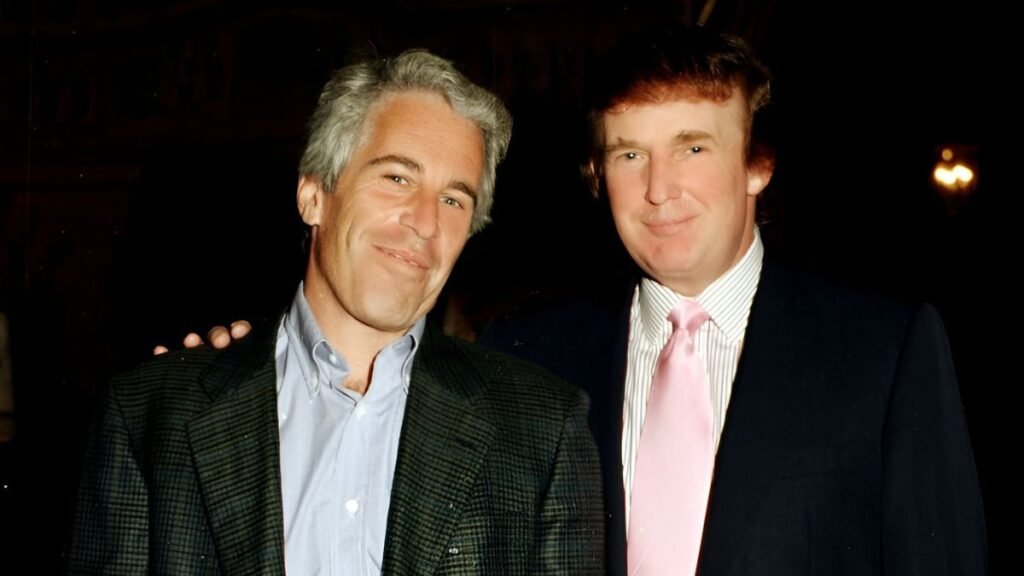
In this entire affair, a piece of legislation known as the “Epstein Files Transparency Act” played a decisive role. Under this law, the government was mandated to make all relevant files public within 30 days. The objective was to ensure that the public learned the full truth and that no information of any kind was withheld.
This legislation is being hailed as a major stride toward transparency, as it not only establishes government accountability but also reinforces public trust.
Senate Unanimity: A Significant Signal
After passing the House, when the bill reached the Senate, it was passed there unanimously as well. This was an extremely significant signal, as it made it clear that political divisions regarding this issue had all but vanished. This action by the Senate further escalated the gravity of the entire matter and ensured that the release of the files was now inevitable.
Trump’s Final Decision and the Path Ahead
When the bill reached Trump, he faced the choice of either signing it or issuing a veto. However, given the prevailing political climate, a veto would have been a risky move for him. Ultimately, he signed the bill, thereby completely clearing the path for the release of the files.
Now, all eyes are fixed on what will emerge from these files. It is conceivable that these documents could yield major revelations—disclosures capable of shaking the foundations of American politics.

Conclusion: A Decision That Could Alter the Political Future
The Epstein files saga is not merely a legal process; rather, it represents a profound issue concerning transparency, power, and accountability. Trump’s shift in stance, the pressure exerted by Congress, and the ultimate decision to release the files—taken together, these events point toward a significant political transformation.
In the days to come, it will be fascinating to observe what revelations emerge from these files and just how far-reaching their impact proves to be. One thing is certain: this case will remain a subject of intense discussion within American politics for a long time to come, and its consequences could be far-reaching.
FAQs
Q. What are the Epstein files?
A. They are documents related to investigations involving Jeffrey Epstein and his connections.
Q. Why is this issue important?
A. Because it could reveal details about powerful individuals and raise transparency concerns.
Q. Did Trump support releasing the files?
A. Yes, he eventually supported their release after initial hesitation.
Q. What is the Epstein Files Transparency Act?
A. It is a law requiring the government to release the files within 30 days.
Q. What could happen next?
A. The released files may lead to major political and legal developments.
Leave a Reply