
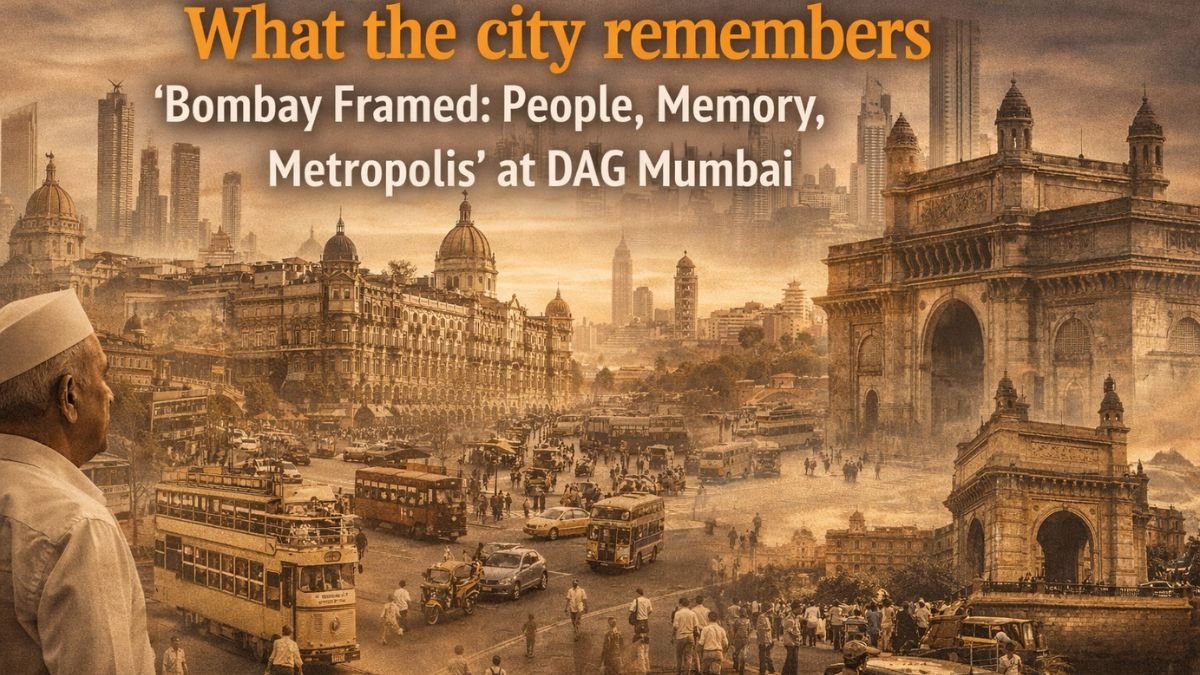
Cities are more than just buildings, roads, and skylines—they are living, breathing entities shaped by the memories of the people who inhabit them. Few cities embody this idea as powerfully as Mumbai, a place where past and present constantly overlap. Known for its relentless pace and ever-changing landscape, Mumbai carries within it layers of history, emotion, and identity that continue to evolve with time.
The exhibition “Bombay Framed: People, Memory, Metropolis” at DAG Mumbai offers a rare and intimate look into this layered identity. It is not just an art show; it is a reflection of how a city remembers itself through its people, its spaces, and the stories that refuse to fade away.
The Idea Behind “Bombay Framed”
The title itself—“Bombay Framed”—evokes a sense of looking back at a city that once was, while also questioning how it is seen today. The use of the name “Bombay” rather than Mumbai is deliberate. It signals a connection to memory, nostalgia, and a certain cultural identity that continues to exist alongside the modern metropolis.
This exhibition brings together artworks that capture different moments in the city’s journey. Through photography, paintings, and visual narratives, it explores how individuals experience the city and how those experiences become part of a collective memory. Each piece acts as a frame, preserving a fragment of time that might otherwise be lost in the rapid transformation of urban life.
People as the Soul of the City
At the heart of the exhibition lies a simple but powerful idea: a city is defined by its people. The artworks featured in “Bombay Framed” focus not only on iconic locations but also on everyday lives—vendors, commuters, families, artists, and dreamers who shape the rhythm of the city.
These human stories bring depth to the visual experience. A photograph of a crowded train platform is not just about movement; it is about ambition, struggle, and hope. A portrait of a street vendor reflects resilience and survival. Each image tells a story that goes beyond what is immediately visible.
By placing people at the center, the exhibition reminds viewers that memory is not stored in monuments alone—it lives in human experiences, interactions, and emotions.
Memory as a Living Archive
Memory in a city like Mumbai is not static. It is constantly being rewritten as new developments emerge and old structures disappear. Yet, traces of the past remain, often in subtle and unexpected ways. An old cinema hall tucked between modern buildings, a fading signboard, or a narrow lane that has witnessed decades of change—all these elements contribute to the city’s memory.
“Bombay Framed” captures this dynamic nature of memory. The artworks do not present a fixed version of the past; instead, they show how memory shifts and adapts over time. Some pieces evoke nostalgia, while others highlight loss or transformation.
This interplay between remembering and forgetting is what makes the exhibition deeply engaging. It encourages viewers to reflect on their own memories of the city and how those memories shape their understanding of it.
The Metropolis in Transition
Mumbai has always been a city of transformation. From its colonial past to its present-day status as India’s financial capital, it has undergone continuous change. Skyscrapers rise where old neighborhoods once stood, and new infrastructure reshapes the urban landscape.
The exhibition does not shy away from this reality. Instead, it embraces it, presenting the metropolis as a space of both opportunity and tension. Some artworks celebrate progress and growth, while others question the cost of development—displacement, loss of heritage, and the erasure of cultural spaces.
Through this lens, “Bombay Framed” becomes more than an artistic exploration; it becomes a commentary on urban life itself. It asks important questions about what is gained and what is lost as cities evolve.
Art as a Medium of Urban Storytelling
One of the most compelling aspects of the exhibition is its use of art as a storytelling tool. Each artwork serves as a narrative, offering a unique perspective on the city. Together, they create a mosaic of experiences that capture the complexity of Mumbai.
Photography plays a significant role in this storytelling. It freezes moments in time, allowing viewers to observe details that might otherwise go unnoticed. Paintings, on the other hand, bring emotion and interpretation into the frame, offering a more subjective view of the city.
This combination of mediums enriches the overall experience. It allows the audience to engage with the city in multiple ways—through observation, emotion, and reflection.
The Role of DAG Mumbai in Preserving Cultural Memory
As a space dedicated to art and culture, DAG Mumbai plays an important role in preserving and showcasing India’s artistic heritage. Exhibitions like “Bombay Framed” highlight the gallery’s commitment to creating meaningful dialogues around art and society.
By bringing together diverse works under a common theme, DAG Mumbai creates a platform for exploring complex ideas such as memory, identity, and urban transformation. It allows artists and audiences to connect on a deeper level, fostering a greater appreciation for the cultural and historical dimensions of the city.
In doing so, the gallery becomes more than just a physical space—it becomes a bridge between the past and the present.
A Personal Journey Through the Exhibition
Walking through “Bombay Framed” is not just about viewing art; it is about experiencing the city in a new way. Each piece invites you to pause, reflect, and engage with the stories it holds. The exhibition creates a sense of intimacy, as if you are stepping into someone else’s memories while also revisiting your own.
For those who have lived in Mumbai, the experience can be deeply personal. Familiar scenes evoke a sense of recognition, while unfamiliar ones offer new insights. For visitors, it provides a window into the city’s soul, revealing layers that go beyond its surface image.
This personal connection is what makes the exhibition truly impactful. It transforms the act of viewing into an act of remembering.
The Emotional Landscape of a City
Cities are often described in terms of their physical features—architecture, infrastructure, geography. But what truly defines a city is its emotional landscape. The feelings it evokes, the memories it holds, and the stories it carries are what give it character.
“Bombay Framed” captures this emotional dimension beautifully. It portrays the city not just as a place, but as an experience. Joy, struggle, nostalgia, ambition—all these emotions are woven into the artworks, creating a rich and layered narrative.
This emotional depth is what allows the exhibition to resonate with a wide audience. It speaks to universal human experiences while remaining rooted in the specific context of Mumbai.
Why Exhibitions Like This Matter
In a rapidly changing world, exhibitions like “Bombay Framed” serve an important purpose. They remind us to pause and reflect on where we come from and how we have changed. They preserve stories that might otherwise be forgotten and give voice to perspectives that are often overlooked.
They also encourage dialogue—about identity, history, and the future of our cities. By engaging with these themes, audiences can develop a deeper understanding of the spaces they inhabit.
In this sense, art becomes a powerful tool for connection. It bridges gaps between generations, cultures, and experiences, creating a shared space for reflection and understanding.
Conclusion: Remembering the City, Reimagining Its Future
“What the city remembers” is not just a question—it is an ongoing process. Cities like Mumbai are constantly evolving, but their memories remain embedded in the lives of their people and the stories they tell.
“Bombay Framed: People, Memory, Metropolis” at DAG Mumbai captures this essence with remarkable sensitivity and depth. It invites viewers to look beyond the surface and engage with the city on a more meaningful level.
In doing so, it reminds us that while cities may change, their memories continue to shape who we are. And perhaps, by understanding these memories, we can begin to imagine a future that honors the past while embracing the possibilities of what lies ahead.
FAQs
Q1. What is “Bombay Framed: People, Memory, Metropolis”?
It is an art exhibition at DAG Mumbai exploring the city’s history, people, and memories through visual storytelling.
Q2. Why is the name “Bombay” used instead of Mumbai?
It reflects nostalgia and connects to the city’s past identity and cultural memory.
Q3. What makes this exhibition unique?
It blends art, history, and personal stories to show how Mumbai’s identity is shaped by its people and evolving urban life.
Leave a Reply