
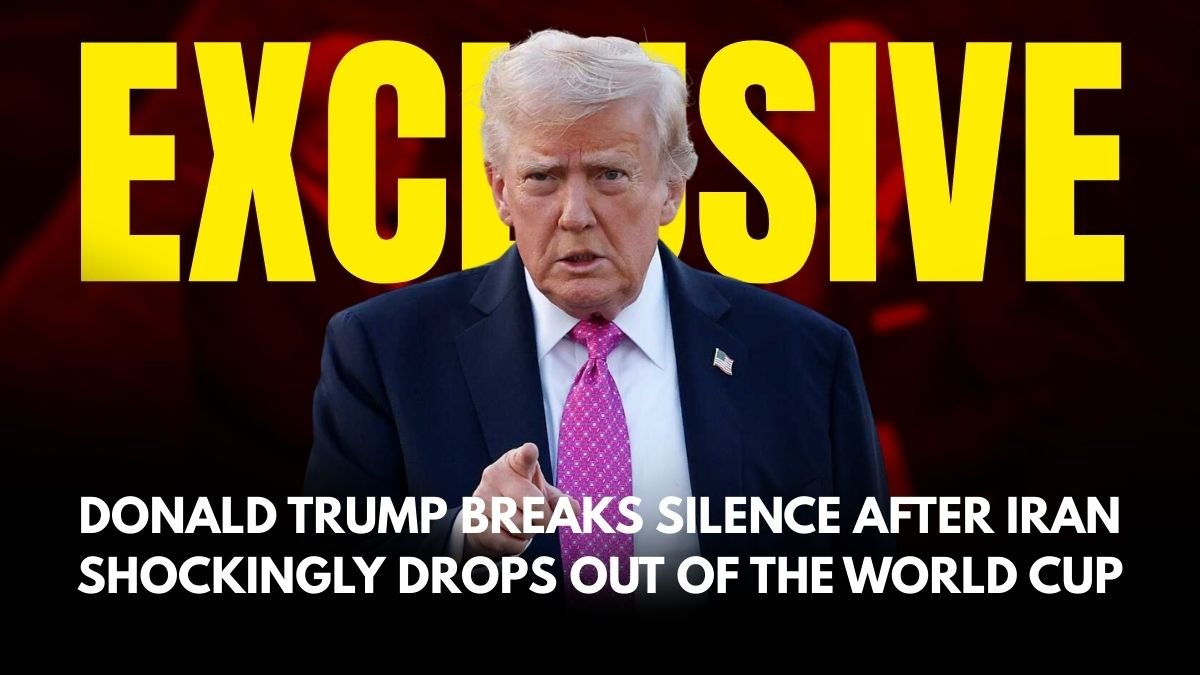
A major political and sports-related debate has currently erupted surrounding the FIFA World Cup—one of the world’s largest sporting events. News recently emerged that the Iranian national football team faces uncertainty regarding its participation in the tournament. Former U.S. President Donald Trump has also weighed in on this issue.
Sharing a message on social media, Trump stated that he does not believe it would be “appropriate” for the Iranian team to play in the World Cup under the current circumstances. In his statement, he expressed concern regarding the safety of the players, asserting that in the current war-like conditions, the lives and safety of the athletes are of paramount importance.
In his message, Trump wrote that while the Iranian team is welcome to participate in the tournament, given the prevailing situation, he feels it might not be safe for the team to do so.
Questions Raised Over Player Safety
Following Trump’s statement, discussions have intensified across both the sports and political spheres. Many have questioned exactly what Trump meant by “player safety.”
However, a full explanation behind this statement was not immediately provided by the White House. Some officials indicated that Trump’s remarks might be alluding to the escalating tensions between the United States and Iran—particularly in the wake of military actions that began in late February.
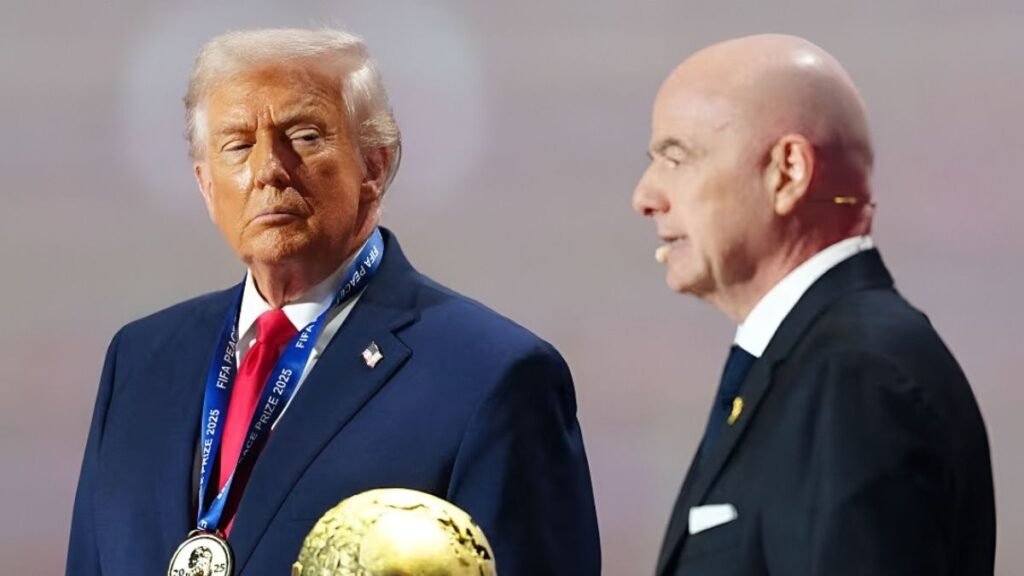
Meanwhile, Trump’s meeting with FIFA President Gianni Infantino also became a topic of discussion. During this meeting, Trump had assured Infantino that, in accordance with the regulations, the Iranian team and its players would be permitted to travel to the United States to participate in the World Cup.
Hosting the 2026 World Cup and Iran’s Schedule
The upcoming World Cup is set to be a historic tournament, as it will be jointly hosted by three nations: the United States, Canada, and Mexico. This marks the first time that the World Cup will be played simultaneously across three different countries.
The tournament is scheduled to take place from June 11 to July 19 and will feature a total of 48 participating teams. Iran was among the teams that successfully qualified for the tournament.
Iran’s opening match was scheduled for June 15 against New Zealand in the city of Inglewood, California. Following this, the team was scheduled to play matches against Belgium on June 21 and Egypt on June 26.
Training in the United States was also planned for the team, with preparations underway to utilize the Kino Sports Complex, located in Tucson, Arizona, as a base camp.
Travel Restrictions and Exemptions for Athletes
The travel restrictions imposed on Iran by the United States are further complicating this issue. However, these restrictions include special exemptions for athletes, coaches, and staff participating in international sports competitions.
This means that, under current regulations, the Iranian national team is permitted to enter the U.S. to participate in the World Cup. Nevertheless, political tensions and security-related concerns have rendered the situation uncertain.
Conflicting statements emerging from officials of both nations have also made it unclear whether or not the Iranian team will ultimately participate in the tournament.
Athletes Caught Between Politics and Sport
This situation is not new for Iranian athletes. On numerous occasions during international competitions, they have faced difficult circumstances due to political pressures and domestic conditions.
Some athletes have even made headlines during overseas competitions for engaging in protests or conveying political messages. In many instances, athletes also harbor concerns that their statements or conduct could have repercussions for their families residing in Iran.
The recent example of Iran’s women’s football team illustrates a similar set of circumstances. During the Asian Cup held in Australia, the players refrained from singing the national anthem—an act interpreted by many as a silent protest or a gesture of mourning.
Protest Evident in the Previous World Cup as Well
Iran’s men’s team also captured global attention during the 2022 FIFA World Cup. During that tournament, held in Qatar, the players chose not to sing the national anthem prior to their match against England.
At that time, widespread protests were sweeping across Iran. These demonstrations were sparked by the death of 22-year-old Mahsa Amini, who had been detained on charges of violating the country’s dress code.
Many observers viewed this action by the players as a rare public act of dissent against the prevailing political climate of the time.
Iranian Athletes Distancing Themselves from the Sport
Over the past few years, a number of Iranian athletes have left the country—citing political or personal reasons—to compete on behalf of other nations. For instance, Kimia Alizadeh—Iran’s first female Olympic medalist—later left the country to compete on behalf of other nations. Similarly, judoka Saeid Mollaei also advanced his career by acquiring citizenship in another country following international pressure and controversies.
These incidents make it evident that, at times, athletes are compelled to grapple with political and social circumstances more than with the sport itself.
Conclusion
The clash between sports and politics on a grand stage like the World Cup is nothing new; however, Iran’s potential absence has rendered the situation even more complex this time around.
This issue has garnered even greater attention following statements made by Donald Trump. At present, it remains unclear whether the Iranian team will ultimately participate in the tournament or not.
One thing, however, is certain: when the world’s largest football tournament kicks off, all eyes will be fixed on whether or not the Iranian team takes the field.
This entire sequence of events has also demonstrated that international sporting competitions are not merely confined to the realm of sports; rather, they frequently evolve into significant platforms for global politics and diplomacy.
FAQs
Q. Why did Iran consider dropping out of the World Cup?
A. Ongoing political tensions and security concerns created uncertainty around participation.
Q. What did Donald Trump say about Iran’s team?
A. He said the team would be welcome but questioned if playing would be safe.
Q. Will Iranian players be allowed to enter the United States?
A. Yes, athletes have exemptions from the travel ban for international competitions.
Q. Which countries are hosting the upcoming World Cup?
A. The tournament will be hosted by the United States, Canada, and Mexico.
Q. Has Iran protested at past World Cups?
A. Yes, players showed silent protest during the 2022 World Cup in Qatar.
Leave a Reply