
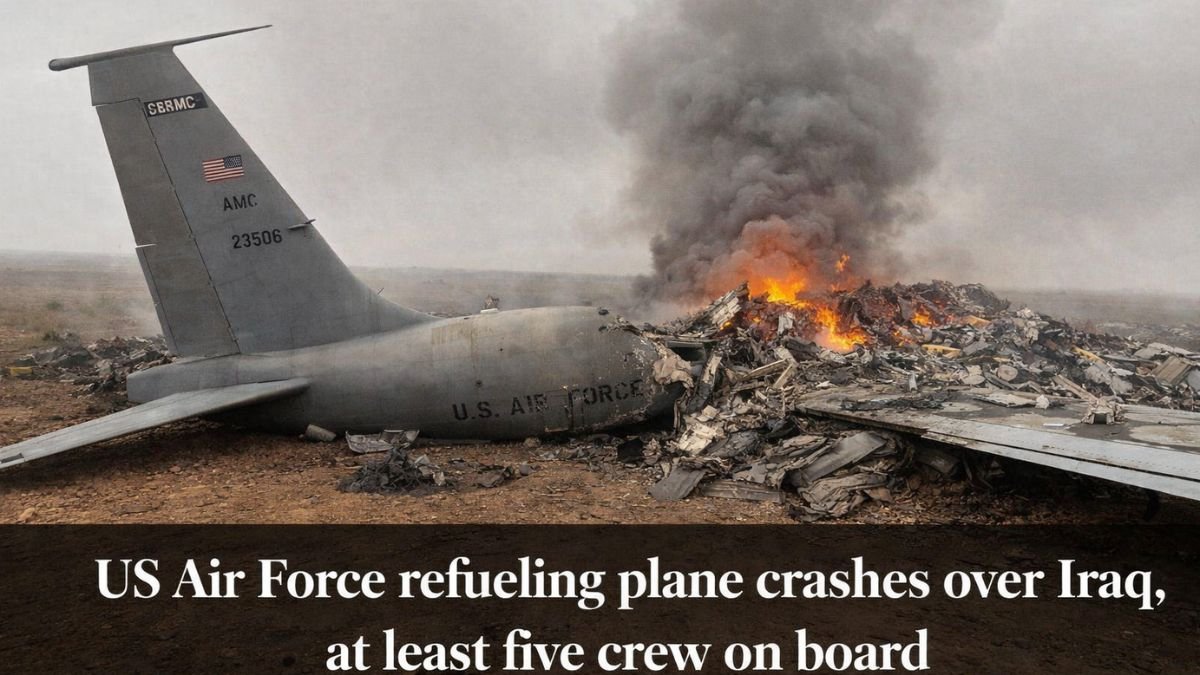
A United States military refueling aircraft has reportedly crashed over Iraqi territory, raising serious concerns about the safety of the crew and the circumstances that led to the accident. According to early reports, the aircraft was part of the operations conducted by the United States Air Force and had at least five crew members on board at the time of the crash. The incident has quickly drawn attention from military officials, aviation experts, and international observers.
Military aircraft accidents are rare but can have significant consequences, particularly when they occur in regions with ongoing security operations. The crash has triggered an immediate response from authorities, who are working to gather information about what happened and determine the status of the crew members involved.
Although details are still emerging, officials have confirmed that the aircraft involved was a refueling tanker used for aerial support missions. Such aircraft play a crucial role in modern military aviation by allowing fighter jets and other aircraft to extend their range without landing. The loss of such a plane not only represents a potential tragedy for the crew but also highlights the challenges faced during complex military operations.
Details of the Crash Over Iraq
The aircraft reportedly went down while flying over Iraq, a region where the United States maintains a military presence as part of international security and counterterrorism operations. Initial information suggests that the aircraft was on an operational mission when the crash occurred.
Authorities have stated that at least five crew members were on board the plane, though the exact number and their current condition have not yet been officially confirmed. Search and rescue teams were reportedly deployed soon after the crash to locate the aircraft and assess the situation.
The location of the crash has made the rescue effort more complicated. Parts of Iraq include remote desert terrain and regions with limited infrastructure, which can slow down emergency response efforts. Military personnel and local authorities are working together to secure the area and gather evidence that may help determine the cause of the accident.
Officials have emphasized that investigations are still in the early stages and that it may take time before a full picture of the incident becomes clear.
Role of Aerial Refueling Aircraft in Military Operations
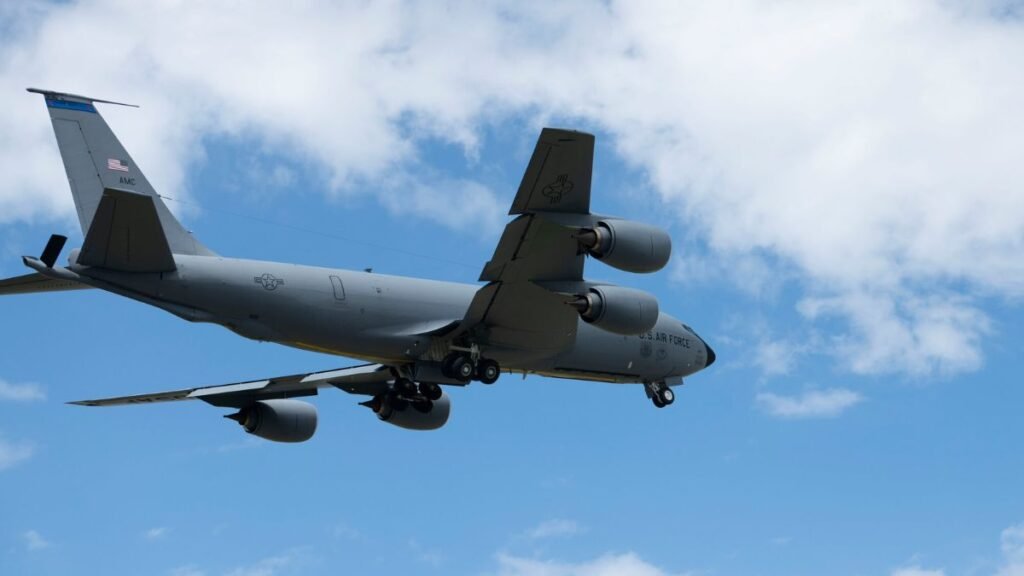
Aerial refueling aircraft are among the most important support assets in modern military aviation. The United States Air Force operates several tanker aircraft designed to provide fuel to other planes during flight. This capability allows fighter jets, bombers, and surveillance aircraft to stay in the air longer and travel much greater distances.
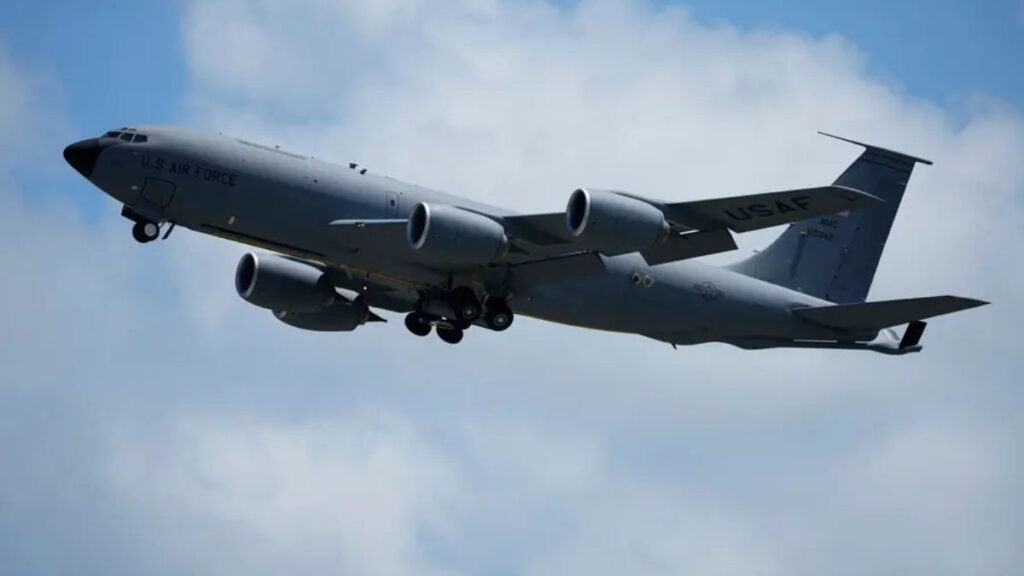
One of the most widely used refueling aircraft in the U.S. military fleet is the Boeing KC-135 Stratotanker, which has been serving the Air Force for decades. Another newer tanker aircraft is the Boeing KC-46 Pegasus, a modern platform designed with advanced systems and improved refueling technology.
These aircraft typically operate with a crew that includes pilots and specialized operators responsible for managing the refueling boom system. During refueling operations, the tanker aircraft must maintain precise flight positions while another aircraft approaches closely to connect and receive fuel.
Because these missions require high levels of coordination and technical precision, tanker crews undergo extensive training to ensure safe and successful operations.
Military Presence and Operations in Iraq
The United States has maintained a military presence in Iraq for many years as part of international efforts aimed at supporting regional stability and countering extremist threats. U.S. forces work alongside Iraqi security forces and coalition partners to conduct training, surveillance, and security operations.
Aircraft operating in the region often provide logistical support, intelligence gathering, and aerial refueling services. These missions help ensure that coalition aircraft can conduct long-duration flights and respond quickly to emerging situations.
While the majority of these operations take place without incident, military aviation always carries inherent risks. Aircraft must operate in challenging environments, sometimes under difficult weather conditions or during nighttime missions.
The recent crash has raised questions about whether mechanical issues, environmental factors, or operational circumstances played a role in the accident.
Investigation and Search Efforts
Following the crash, the United States Department of Defense announced that an investigation would be launched to determine the cause of the incident. Military accident investigations typically involve detailed analysis of flight data, maintenance records, communication logs, and any recovered parts of the aircraft.
Investigators will also examine weather conditions, pilot decisions, and potential mechanical failures that may have contributed to the crash. In many cases, experts from multiple agencies work together to analyze evidence and reconstruct the sequence of events leading up to the accident.
Search and rescue operations remain a top priority. Specialized teams trained for emergency recovery missions are responsible for locating crew members and securing the crash site. Their work is essential not only for rescuing survivors but also for preserving evidence needed for the investigation.
Military officials have stated that updates will be provided as more information becomes available.
Challenges of Military Aviation in Conflict Regions
Operating military aircraft in regions like Iraq presents unique challenges. Pilots must navigate complex airspace that may include civilian flights, military operations, and environmental obstacles. Weather conditions in desert regions can change rapidly, sometimes producing sandstorms or reduced visibility.
In addition, aircraft conducting refueling missions must often coordinate with multiple other planes in the sky. This coordination requires precise timing and constant communication between pilots and mission control teams.
Despite these challenges, military aviation has achieved remarkable safety records through strict training, advanced technology, and careful planning. Every accident is taken seriously because the lessons learned can help prevent similar incidents in the future.
Reactions from Military Officials and Observers
News of the crash has prompted responses from defense officials and military analysts. Many have expressed concern for the crew members involved while also acknowledging the risks associated with military aviation.
Military leaders have emphasized the bravery and professionalism of Air Force personnel who carry out these missions daily. Tanker crews often work long hours in demanding conditions to ensure that other aircraft can safely complete their tasks.
Aviation experts have also highlighted the importance of thorough investigations after such incidents. By identifying the root causes of accidents, military organizations can improve safety procedures and equipment design.
For families of service members, incidents like this serve as a reminder of the sacrifices made by those who serve in the armed forces.
Impact on Military Operations
While a single aircraft accident does not usually halt ongoing military operations, it can lead to temporary reviews of procedures or equipment. Commanders may order safety inspections, review training protocols, or temporarily suspend certain types of missions until more information becomes available.
These precautions are designed to protect personnel and ensure that similar incidents do not occur again. Military organizations place a high priority on safety because even small improvements in procedures can save lives.
At the same time, operational commitments often continue as planned, especially in regions where coalition forces are responsible for maintaining security.
Conclusion
The crash of a U.S. Air Force refueling aircraft over Iraq is a serious incident that has captured international attention. With at least five crew members on board at the time, the focus remains on locating those involved and understanding what led to the accident.
As investigators begin their work, officials are urging patience while the facts are carefully examined. Aviation investigations can take weeks or even months to complete because they require detailed analysis of technical data and physical evidence.
For now, the thoughts of many remain with the crew members and their families. Military personnel around the world recognize the risks involved in aviation missions, and the loss of an aircraft serves as a reminder of the courage and dedication required to perform these duties.
In the coming days, further updates from the United States Air Force and defense authorities will likely shed more light on the circumstances surrounding the crash. Until then, the incident stands as a sobering reminder of the challenges faced by those who serve in military aviation and the importance of continued efforts to improve safety in the skies.
FAQs
Q1. Which organization operated the plane that crashed?
The aircraft was operated by the United States Air Force.
Q2. Where did the refueling plane crash occur?
The military aircraft crashed over Iraq during an operational mission.
Q3. How many crew members were on board the aircraft?
Reports indicate that at least five crew members were on board at the time of the crash.
Leave a Reply