
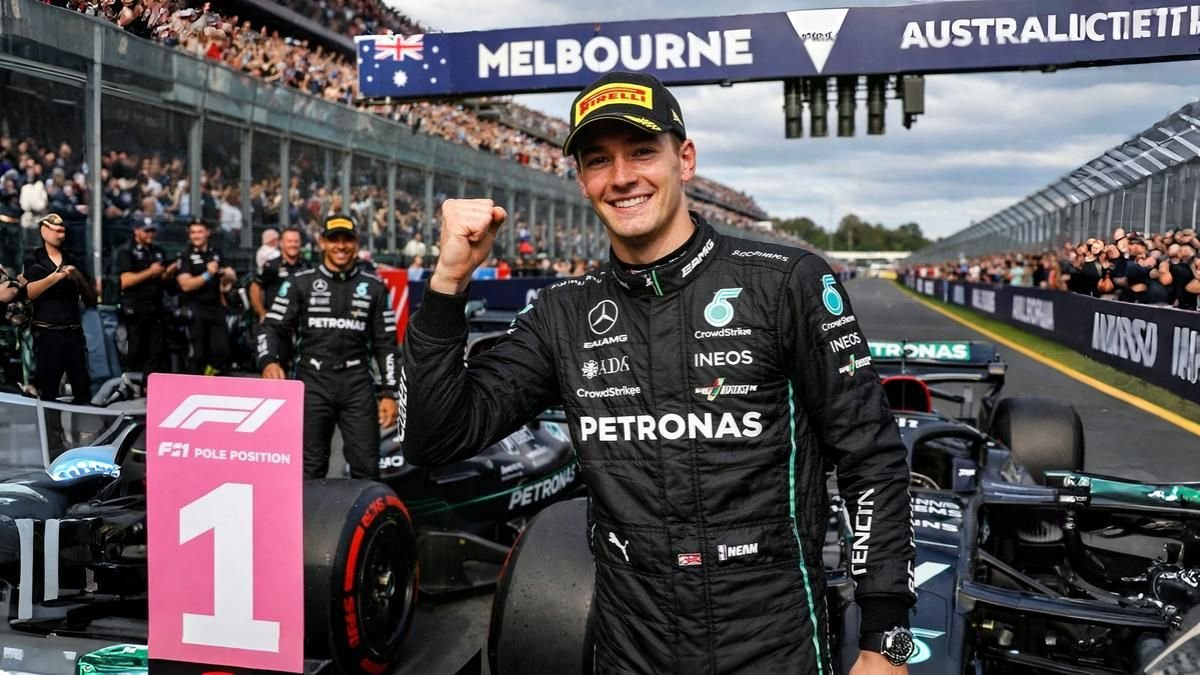
The excitement surrounding the Australian Grand Prix always brings a special energy to the Formula 1 season, and this year’s qualifying session in Melbourne delivered exactly the kind of drama fans expect. As engines roared to life around the iconic Albert Park Circuit, drivers pushed their machines to the limit in pursuit of the coveted pole position. In the end, it was George Russell who stunned the paddock by delivering a flawless performance that secured him the top spot on the grid.
Driving for Mercedes-AMG Petronas Formula One Team, Russell demonstrated both precision and confidence throughout the qualifying rounds. His pole position not only highlighted his growing reputation as one of Formula 1’s most talented drivers but also signaled a potential resurgence for Mercedes after several challenging seasons. Fans and analysts alike were quick to note that the team’s impressive performance could play a major role in shaping the rest of the race weekend.
Mercedes Returns to Form with Dominant Qualifying Performance
For much of the past two seasons, Mercedes had struggled to consistently match the pace of its strongest rivals. However, qualifying in Melbourne told a different story. Both Mercedes cars showed impressive speed and stability, leaving many observers wondering if the team had finally rediscovered the formula that once made them nearly unbeatable in Formula 1.
Russell’s pole position lap was a perfect example of this renewed strength. The car appeared balanced through the fast corners of Albert Park, and the Mercedes power unit delivered strong acceleration on the straights. Russell executed his lap with remarkable control, extracting every ounce of performance from the car.
The team’s engineers and strategists had clearly done their homework. Adjustments to aerodynamics, tire management, and overall setup seemed to pay off in dramatic fashion. While pole position itself is a major achievement, the broader takeaway from qualifying was that Mercedes looked capable of challenging for victory in the race.
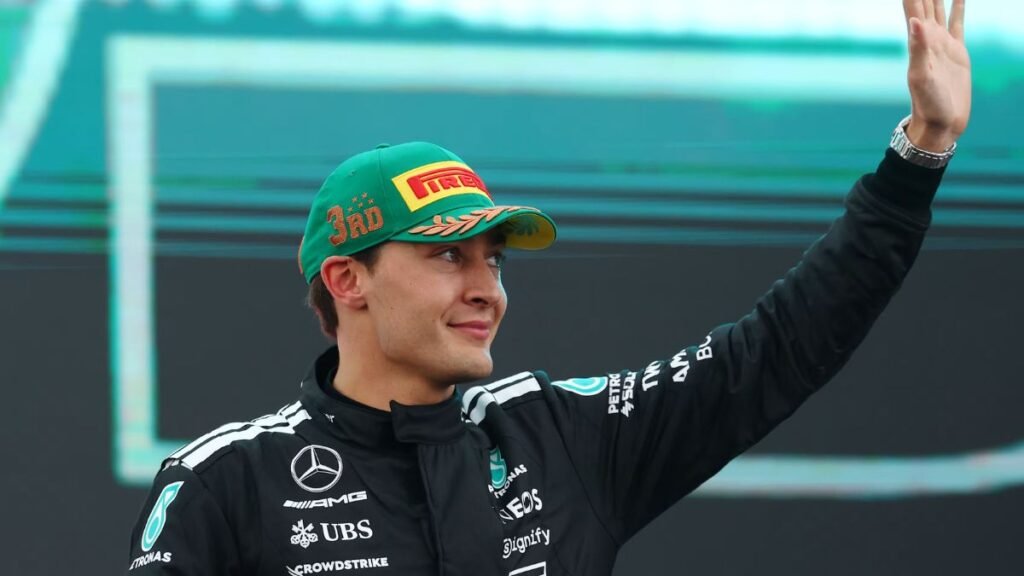
Georage Russell’s Brilliant Lap Under Pressure
Qualifying sessions in Formula 1 are always intense, but the final moments of Q3 can feel especially dramatic. With the clock ticking down and competitors improving their times, drivers must deliver their best performance under enormous pressure. Russell rose to the challenge with a lap that combined speed, precision, and confidence.
As he navigated the technical corners of the Albert Park Circuit, Russell appeared calm and focused. Every braking point was perfectly judged, and his acceleration out of the corners allowed him to build momentum through the lap. When he crossed the finish line, the timing screens confirmed what fans had hoped to see: the fastest lap of the session.
The pole position was a significant milestone not only for Russell personally but also for the Mercedes team. It represented a strong statement that the Silver Arrows were ready to compete at the highest level once again.
The Significance of Albert Park Circuit
The Albert Park Circuit in Melbourne is one of the most beloved venues on the Formula 1 calendar. Known for its scenic location and challenging layout, the circuit combines high-speed straights with technical corners that test both driver skill and car performance.
Because the track winds through public roads around Albert Park Lake, it presents unique challenges compared to traditional permanent circuits. Drivers must adapt to changing grip levels and narrow racing lines, making qualifying particularly crucial. Securing pole position often provides a major advantage, as overtaking opportunities can be limited during the race.
Russell’s pole lap therefore carried even greater significance. Starting at the front of the grid in Melbourne gives him a valuable opportunity to control the race from the opening moments.
Rivals Push Hard but Fall Short
While Mercedes celebrated a successful qualifying session, several rival teams were left reflecting on what might have been. Drivers from top teams pushed aggressively in their final laps, but none were able to match Russell’s blistering pace.
Among the most determined challengers was Max Verstappen, who has been a dominant force in recent Formula 1 seasons with Red Bull Racing. Verstappen delivered a strong performance throughout the qualifying stages but ultimately fell short of taking pole position.
Other contenders also showed flashes of speed, yet the consistency of the Mercedes car proved difficult to overcome. Russell’s lap time stood as the benchmark, forcing the rest of the field to settle for positions behind him on the grid.
The Growing Reputation of George Russell
Over the past few seasons, George Russell has steadily built a reputation as one of Formula 1’s most promising drivers. His journey to the front of the grid has been marked by determination, hard work, and moments of exceptional driving.
After initially making his mark with smaller teams, Russell’s move to Mercedes placed him under intense scrutiny. Driving for one of the sport’s most successful teams comes with enormous expectations. However, Russell has repeatedly shown that he is capable of handling that pressure.
His pole position in Melbourne is another example of his growing confidence and maturity as a driver. Rather than simply relying on raw speed, Russell has developed a complete racing style that combines technical precision with strategic awareness.
Team Strategy and Engineering Excellence
Behind every successful Formula 1 performance lies a massive team effort. While drivers receive much of the attention, the work of engineers, strategists, and mechanics is equally critical. Mercedes’ dominant qualifying performance was the result of countless hours spent analyzing data, refining car setups, and preparing for the challenges of the Melbourne circuit.
The team’s approach to tire management also played an important role. In qualifying, finding the perfect window for tire performance can make the difference between pole position and a mid-grid start. Mercedes appeared to time their runs perfectly, allowing Russell to extract maximum grip during his final lap.
This level of coordination between driver and team is what defines championship-winning organizations, and Mercedes showed clear signs of returning to that standard.
What This Means for the Race
Although qualifying success is important, the race itself often presents entirely different challenges. Factors such as tire degradation, race strategy, and potential safety car periods can dramatically influence the final outcome.
Starting from pole position gives Russell a strategic advantage, but it does not guarantee victory. Drivers behind him will be eager to challenge for the lead, particularly during the opening laps when positions can change quickly.
However, Mercedes’ strong qualifying pace suggests that they could be well-positioned to compete throughout the race. If Russell maintains his composure and the team executes its strategy effectively, a race win is certainly within reach.
Excitement Builds Among Fans
The dramatic qualifying session in Melbourne has energized Formula 1 fans around the world. Supporters of Mercedes are hopeful that the team’s return to form could signal a more competitive season ahead. At the same time, fans of rival teams are eager to see whether their drivers can mount a challenge during the race.
The unpredictability of Formula 1 is part of what makes the sport so captivating. Even when one team appears dominant in qualifying, the race can produce unexpected twists and thrilling battles.
For spectators at Albert Park and millions watching globally, the stage is now set for an exciting Australian Grand Prix.
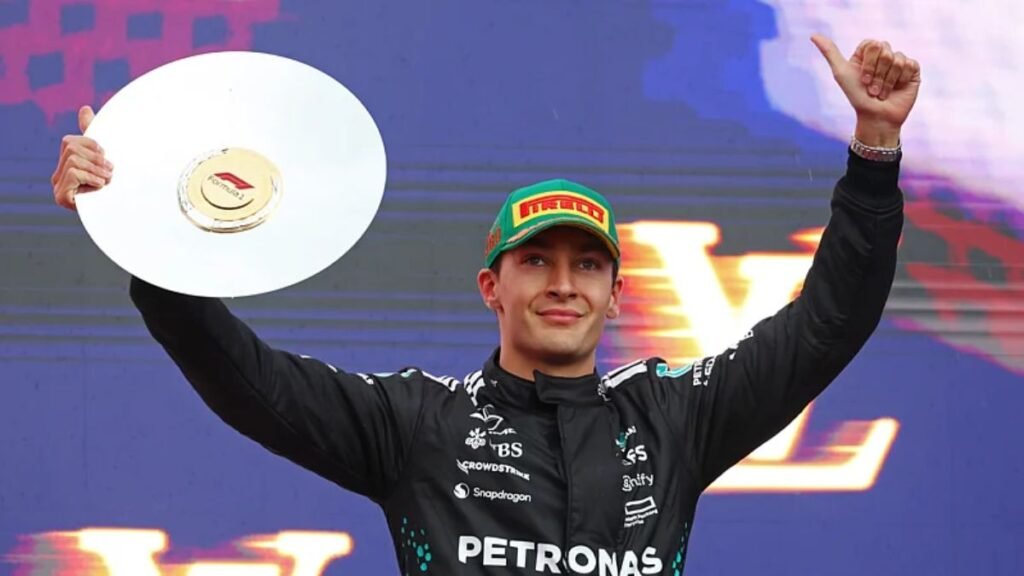
A Promising Sign for Mercedes’ Future
Beyond the immediate excitement of pole position, Mercedes’ performance in Melbourne may have broader implications for the season. After facing difficulties in recent years, the team has been determined to return to the front of the grid.
Russell’s achievement suggests that those efforts may finally be paying off. Improved car development, refined strategies, and strong driver performances could help Mercedes reestablish itself as a championship contender.
If the team continues to build on this momentum, the Australian Grand Prix might be remembered as the moment when Mercedes truly returned to competitive form.
Looking Ahead to Race Day
As the sun sets over Melbourne and preparations begin for race day, anticipation continues to grow. Teams will analyze qualifying data, refine their strategies, and prepare their cars for the demands of a full Grand Prix distance.
For George Russell, the challenge will be to convert his pole position into a strong race result. The competition will be fierce, and every decision—from tire choices to pit stop timing—could influence the final outcome.
Nevertheless, Russell and Mercedes have already made a powerful statement with their qualifying performance. Their dominance in Melbourne has captured the attention of the Formula 1 world and set the stage for what promises to be an unforgettable race.
Whether Russell can maintain his advantage or whether rivals will rise to the challenge remains to be seen. What is certain, however, is that the Australian Grand Prix weekend has already delivered a thrilling start, and the race ahead is filled with possibilities.
FAQs
1. Who won pole position in the Australian Grand Prix qualifying?
George Russell secured pole position during qualifying in Melbourne.
2. Which team dominated the qualifying session?
Mercedes-AMG Petronas Formula One Team dominated the session with impressive pace.
3. Where was the qualifying session held?
The qualifying took place at the Albert Park Circuit in Melbourne, Australia.
Leave a Reply