

The world of folk and protest music has lost one of its most influential voices. Country Joe McDonald, the singer-songwriter whose powerful antiwar songs became a defining soundtrack of the 1960s protest movement, has died at the age of 84. Best known for his unforgettable performance of “I-Feel-Like-I’m-Fixin’-to-Die Rag,” McDonald used music as a platform for social commentary during one of the most turbulent periods in American history. His songs captured the anger, frustration, and hopes of a generation questioning war and authority.
Throughout his long career, McDonald remained a symbol of artistic courage and political expression. His music not only entertained audiences but also encouraged people to think critically about war, politics, and social justice. His passing marks the end of an era for protest music and for the cultural revolution that shaped the late twentieth century.
The Voice of a Generation
During the 1960s, the United States was deeply divided over the escalating conflict in Southeast Asia. Amid this climate of unrest, McDonald emerged as a prominent musical voice opposing the war. As the frontman of Country Joe and the Fish, he blended folk traditions with psychedelic rock, creating songs that carried both humor and biting political satire.
His music resonated with young people who were questioning the government’s involvement in the war and the broader political establishment. McDonald’s lyrics were often direct, sarcastic, and unapologetically critical. This approach helped him stand out in the growing protest music movement, placing him alongside other influential artists who used music as a form of resistance and expression.
The Anthem of Protest
McDonald’s most famous work, “I-Feel-Like-I’m-Fixin’-to-Die Rag,” quickly became one of the most recognizable protest songs of its time. The song used dark humor and catchy melodies to criticize the Vietnam War and the political leaders who supported it. Its lyrics reflected the growing frustration of a generation watching thousands of young Americans being sent into combat.
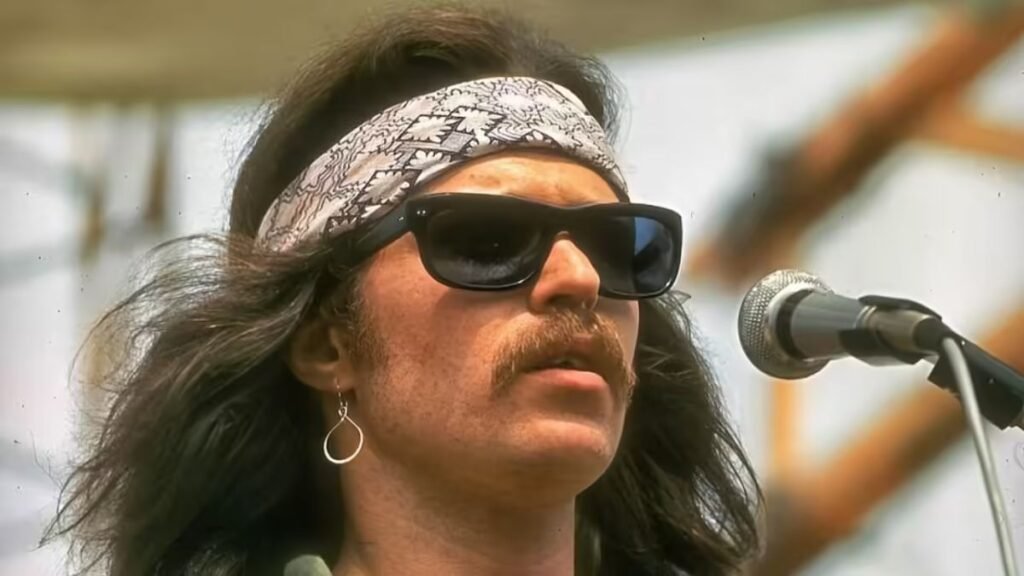
The song reached an even larger audience during McDonald’s iconic performance at the legendary Woodstock music festival in 1969. Standing alone on stage with a guitar, McDonald led the massive crowd in a chant that mocked the war effort. The moment became one of the defining scenes of the festival and cemented his reputation as a fearless protest artist.
Woodstock itself symbolized the counterculture movement of the era, and McDonald’s performance captured the spirit of rebellion and unity that defined the event. For many who attended or later watched recordings of the festival, the performance remains unforgettable.
A Career Beyond Protest
Although McDonald became famous for his antiwar activism, his musical career extended far beyond a single song or political cause. Over the decades, he continued writing and performing music that explored themes ranging from personal reflection to environmental concerns and social justice.
He released numerous albums and toured internationally, performing both classic protest songs and newer compositions. His ability to adapt while maintaining his core message allowed him to stay relevant even as musical trends changed. McDonald also became known for his storytelling and historical reflections, often sharing insights about the social movements that influenced his work.
In later years, he continued to connect with audiences through live performances, lectures, and recordings. Many fans admired his authenticity and the consistency of his beliefs, qualities that helped sustain his legacy as an artist who never abandoned his principles.
Cultural Impact and Legacy
The influence of Country Joe McDonald reaches far beyond the folk and rock genres. His music played a role in shaping the broader protest culture of the 1960s and 1970s. Songs like “I-Feel-Like-I’m-Fixin’-to-Die Rag” became more than just music; they became symbols of resistance and reminders of the power of art to challenge authority.
McDonald’s work demonstrated how musicians could use their platforms to speak about political issues and social injustice. His willingness to confront controversial topics inspired many later artists to use music as a form of activism. Even decades after the height of the Vietnam War protests, his songs continue to be studied and remembered as cultural artifacts of a transformative era.
For historians and music lovers alike, McDonald’s contributions represent a bridge between traditional folk protest music and the modern era of politically conscious art. His career proved that music could influence public discourse and become part of the historical narrative of a nation.
Conclusion
The passing of Country Joe McDonald marks the loss of a powerful voice in music and social activism. Through his songs, performances, and unwavering commitment to speaking out against war, he helped define the spirit of a generation searching for peace and justice. His music captured the emotions of a turbulent time while encouraging listeners to question authority and imagine a better world.
Although he is gone, McDonald’s legacy lives on through the songs that once echoed across college campuses, protest rallies, and historic festivals. His work remains a reminder that music can be both art and activism, capable of inspiring change and shaping cultural memory for generations to come.
FAQs
Q1. Who was Country Joe McDonald?
Country Joe McDonald was an American folk and protest singer best known for his powerful antiwar songs during the Vietnam War era.
Q2. Which song made Country Joe McDonald famous?
He became widely known for the antiwar protest song “I-Feel-Like-I’m-Fixin’-to-Die Rag,” performed at Woodstock.
Q3. How old was Country Joe McDonald when he died?
Country Joe McDonald passed away at the age of 84.
Leave a Reply