
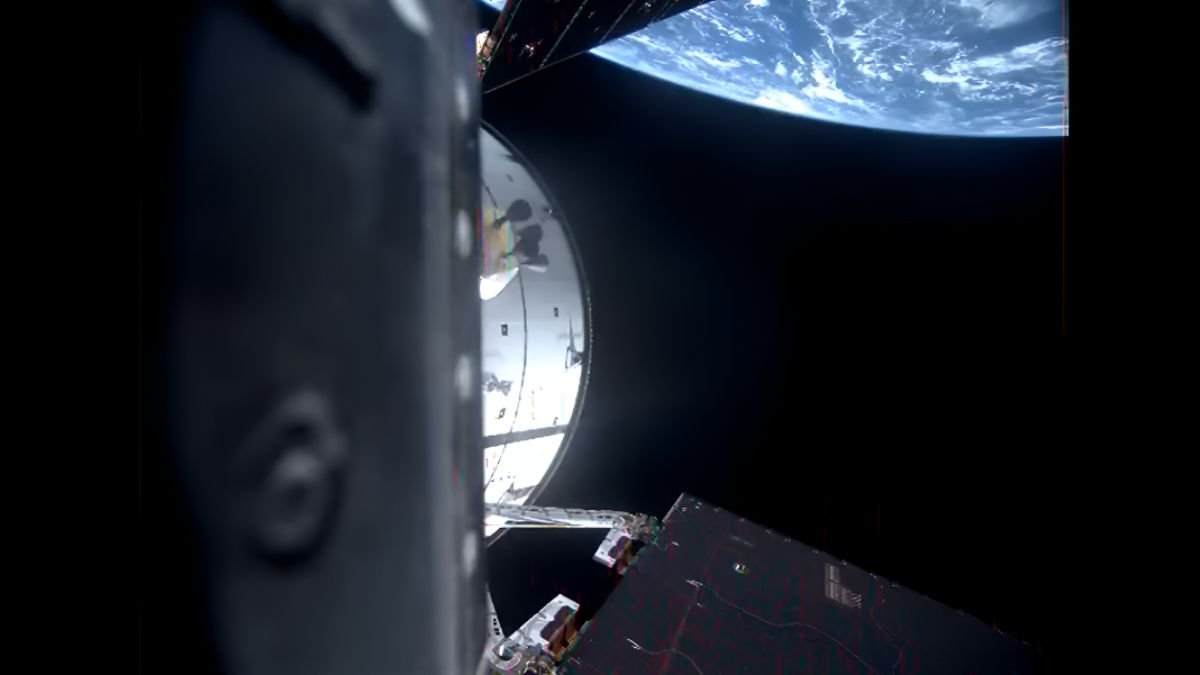
Marking another major achievement in the field of space exploration, the crew of the Artemis II mission has successfully completed one of its initial and critical objectives: the Proximity Operations Demonstration. This procedure lasted approximately 70 minutes, during which the Orion spacecraft (christened “Integrity”) was maneuvered toward—and subsequently away from—another object with extreme precision and control. Throughout this process, the crew utilized manual controls to repeatedly execute approach and departure maneuvers, thereby gaining practical experience in close-proximity space operations.
The primary objective of this exercise was to assess how efficiently the spacecraft could be controlled at close range. For this purpose, the ICPS (Interim Cryogenic Propulsion Stage) served as the designated target. This entire procedure is considered vital for future complex missions, particularly those involving operations in the lunar vicinity.
Safe Distance and Automated Burn Procedure
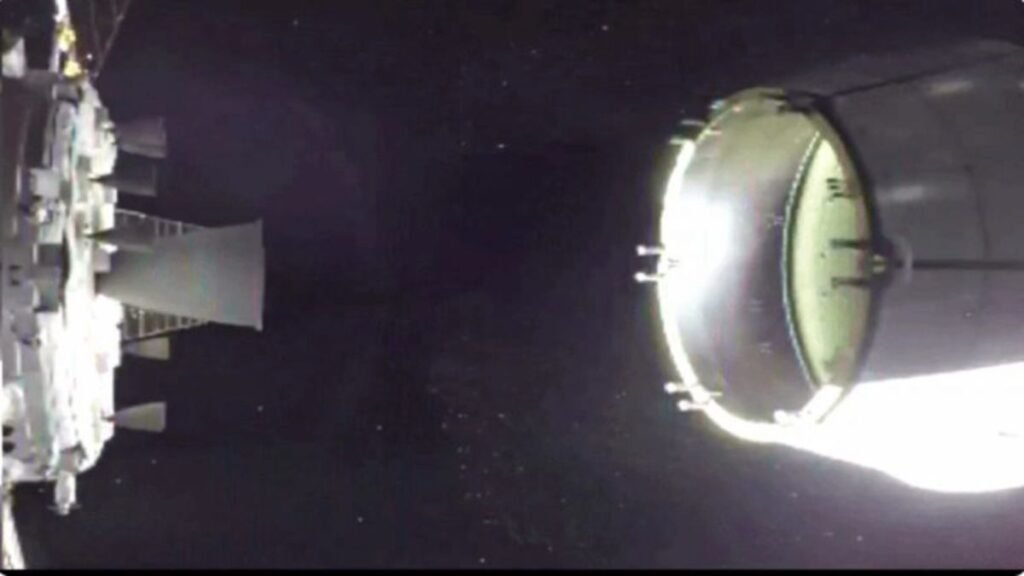
Following the conclusion of the proximity operations, Orion executed an automated departure burn. The purpose of this maneuver was to propel the spacecraft to a safe distance from the ICPS. This process was entirely automated, demonstrating that modern spacecraft are highly reliable under both manual and automated control.
Subsequently, the ICPS itself will perform a disposal burn, causing it to re-enter Earth’s atmosphere and safely disintegrate over a remote region of the Pacific Ocean. This step is crucial for managing and mitigating space debris.

Launch of CubeSats: Small Satellites, Big Objectives
Alongside this mission, four small yet highly significant satellites—known as CubeSats—were also launched. These compact satellites possess the potential to make substantial contributions to future space research. These CubeSats include:
- ATENEA, which will conduct studies on radiation safety and communication technologies.
- Space Weather CubeSat-1, which will measure activities related to space weather.
- TACHELES, which will perform technical tests for future lunar missions.
- K-Rad Cube, which will study the biological effects of radiation.
All of these satellites have been developed by the space agencies of various nations, making this mission an excellent example of international cooperation.
Technical Challenge: Toilet System Issue
As with every space mission, this mission has also encountered certain technical challenges. The crew has reported a blinking fault light within the spacecraft’s toilet system. Although this is not currently considered a serious issue, the Mission Control team is keeping a constant watch on it and is working in tandem with the crew to resolve it.
Minor issues of this nature are common in space missions; however, it is crucial to resolve them in a timely manner to ensure that subsequent operations remain unaffected.
Preparations for the Next Phase: Perigee Raise Burn
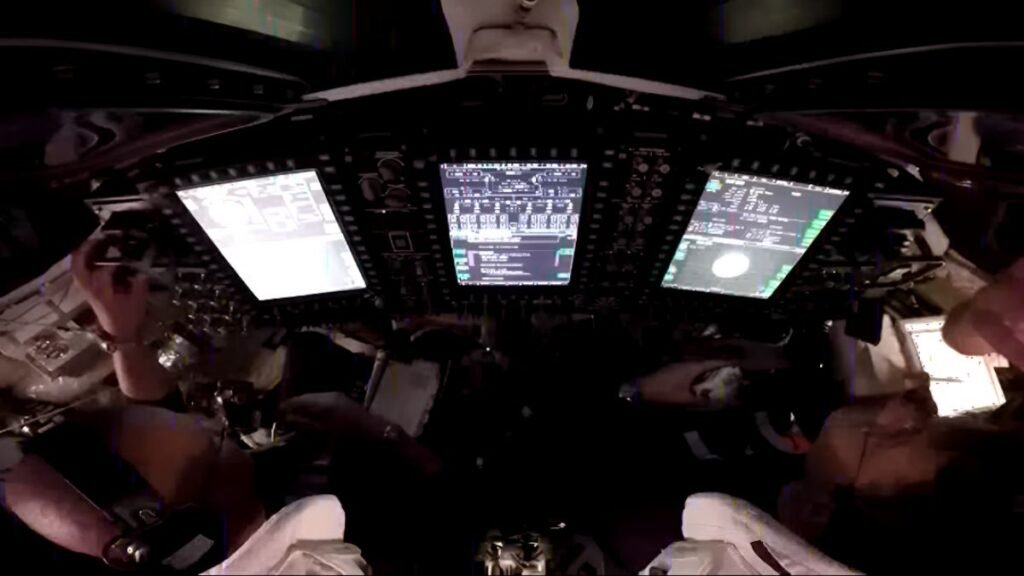
The next critical phase of the mission is the Perigee Raise Burn, preparations for which have already begun. This burn is executed to elevate the lowest point of the spacecraft’s orbit (the perigee). This maneuver renders the spacecraft’s orbit more stable and secure.
Prior to this, the Apogee Raise Burn was successfully completed; together, these two burns will shape Orion’s initial orbit into its correct configuration. This constitutes a vital step for the subsequent translunar operations that will propel the spacecraft toward the Moon.
Crew Routine and Discipline
Working in space is as demanding in terms of discipline as it is thrilling. Throughout the mission, the crew must adhere to a strict schedule for both rest and work. Recently, following a four-hour rest period, the crew was reactivated to enable them to prepare for the upcoming phase.
Their daily routine is meticulously designed to ensure they remain in peak physical and mental condition, as even the slightest error in the space environment can escalate into a major crisis.

The Future of Space Missions
The Artemis II mission is not merely a single flight; rather, it is laying the foundation for future lunar and Martian missions. The data and experience gained during this mission will make human spaceflight safer, more efficient, and more effective in the years to come.
This mission also demonstrates how modern technology, international collaboration, and human courage can combine to propel space exploration to new heights.
Conclusion
The progress of the Artemis II mission thus far has been remarkably impressive. The success of proximity operations, the deployment of CubeSats, and the preparations for the upcoming Perigee Raise Burn indicate that the mission is proceeding in the right direction.
Although some technical challenges have arisen, the team’s readiness and expertise ensure that the mission remains safe and successful. The upcoming phases are poised to make this mission even more exciting and historic.
FAQs
Q. What is the Artemis II mission?
A. Artemis II is NASA’s crewed mission to test the Orion spacecraft before future lunar missions.
Q. What are proximity operations?
A. They are controlled movements where a spacecraft approaches and moves around another object in space.
Q. What is a perigee raise burn?
A. It is a maneuver used to increase the lowest point of a spacecraft’s orbit around Earth.
Q. What are CubeSats?
A. CubeSats are small satellites used for scientific experiments and space research.
Q. Did the Artemis II mission face any issues?
A. Yes, a minor issue with the toilet system was reported, but it is being managed by the team.
Leave a Reply