

The United States has been reputed to manufacture the most powerful and highly advanced fighter aircraft in the world since the World War II. Since the 1940s up to the modern era, the aviation industry in America has generated several fighter aircrafts that were extremely compelling in terms of its capability, speed and technology. It is not something easy to design, construct and finally deploy a fighter jet into mass production. There are occasions when even brilliant and well advanced aircrafts are relegated to the past due to one reason or the other before they can see the light of day.
There are those aircraft that were way ahead of their time, those that were risky in technology and those that just did not develop simply because of misfortune. However, these aircraft are very vital in the history of aviation since they formed the basis of the future technologies. We will see some interesting American fighter aircraft which never saw widespread use despite their spectacular capabilities.
Grumman XF5F-1 Skyrocket: A Design Ahead of Its Time
The Grumman XF5F-1 Skyrocket was a carrier based fighter that was highly advanced at the time of being designed in the early 1940s. Twins engines carrier fighters were uncommon during that period, but this plane proved quite outstanding during tests. It was superior to other developed airplanes of the era 1941 in a number of ways.
The counter-rotating propellers also solved the issue of torque and its speed in rising was a key asset. It was a complicated aircraft and had twin engines, thus its maintenance proved hard and the US Navy finally chose to have a less complicated and costly aircraft. The technology of this project was later used as a fueling factor towards the invention of the legendary F7F Tigercat.
McDonnell XP-67 “Moonbat”: A Unique but Risky Experiment
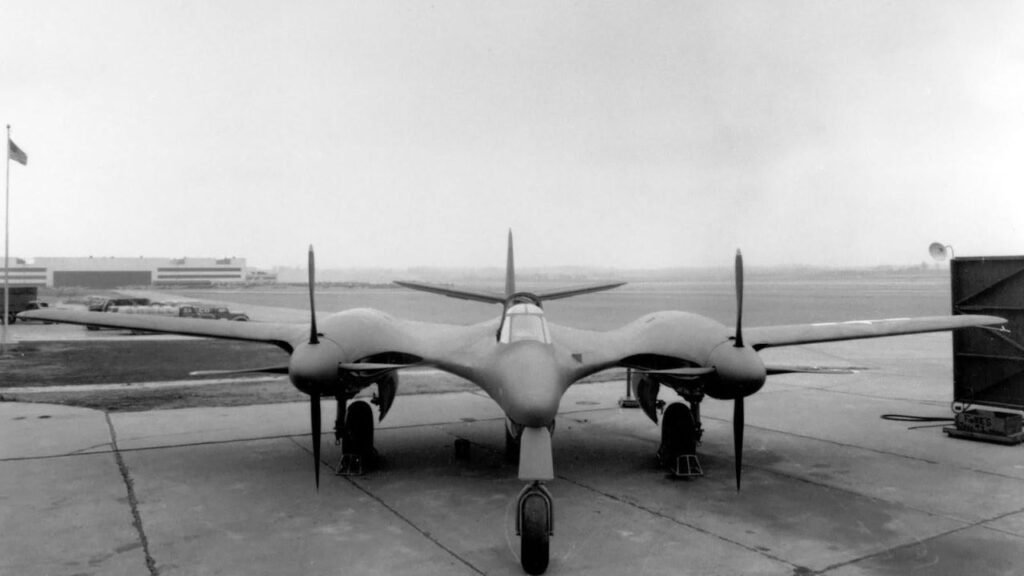
The XP-67 Moonbat was created in 1944 and at first sight it was easy to identify by its unconventional design. Its wings and body were nearly joined into one body such that the creature appeared to be a stingray in flight. The design was to cut down air resistance and produce a greater lift.
But in practice flight-tests it did not prove to be as good as it could be. The planes were found to be underpowered, hard to maneuver, and consumed a lot of fuel. The project was gutted down as too risky when one of the prototypes crashed. Nonetheless, it has influenced the wing-body blended design of numerous current planes and future designs.
Northrop F-18L: A Failure Despite Superior Performance
The F-18L was a lightweight ground-launched take off on the well-known F/A-18 Hornet. It did not have other options such as heavy landing gear and folding wings since it was not meant to serve in aircraft carriers. Consequently, it weighed about 30 percent less and was more maneuverable and had higher range.
The project however did not succeed as most countries felt secure to buy models that were in service. This enhanced prototype therefore never saw the light of mass production.
Curtiss-Wright XF-87 Blackhawk: The Story of the Company’s Decline
Curtiss-Wright was among the largest airplane manufacturers in the world at the end of the World War II. However, the XF-87 Blackhawk project turned out to be a breakthrough to the company. It was a four engine jet fighter, which was schemed to be substituted with a two-engine fighter that had more power.
Nevertheless, the US Air Force eventually settled on a different plane and the project was scrapped. This saw the company step out of the aircraft manufacturing business gradually.
Curtiss-Wright XP-55 Ascender: Futuristic but Dangerous
The XP-55 Ascender resembled a plane that had been taken out of science fiction movie. It was equipped with tiny front wings (canards), a rear-fitted engine, and a three-wheel landing gear, a new concept in those times.
Nevertheless, its air tests showed that it had severe issues. The characteristics of its stall were very hazardous and following the numerous accidents the program was dropped. Canards and tricycle landing gear is the modern-day feature of most of the modern fighter jets, but in the 1940s, this was another technological advancement that was regarded highly.
North American YF-93: An Ambitious Long-Range Fighter
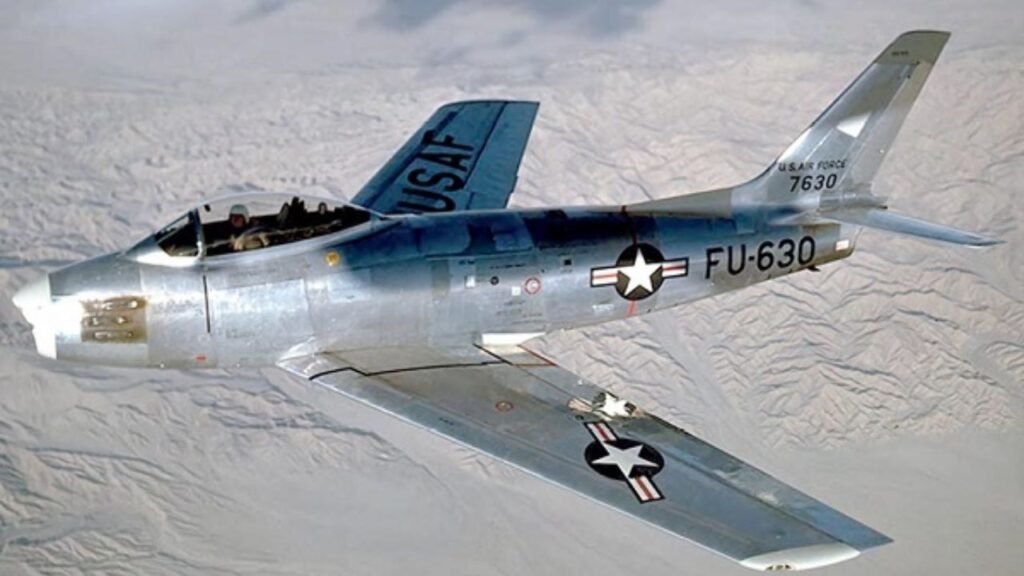
The YF-93 is an extension of the great F-86 Sabre that was designed to engage in combat in the deep enemy territory over a long range. It had an increased fuel capacity and heavy-firing weapons.
Nevertheless, its air-intake system ran into difficulties and simultaneously high-speed bombers started to appear. This led to the cancellation of the project and only prototypes were conducted.
A Precious Heritage of Aviation History
The history of all these planes proves that the way to the technological advancement does not always go in linear. The unsuccessful projects are sometimes the beginning of the successful technologies in the future. Although these fighter jets did not come into mass production, their tests and inventions were of paramount significance to the development of the modern aviation technology.
That is the reason why these unfulfilled dreams play a special part in aviation history which is so fascinating.
FAQs
1. Why did many advanced fighter aircraft never enter service?
Many advanced fighter aircraft failed to enter service due to technical problems, high maintenance costs, design risks, or because better alternatives became available.
2. What was unique about the McDonnell XP-67 “Moonbat”?
The XP-67 had a very unusual blended wing-body design that looked like a flying stingray, aiming to reduce drag and improve aerodynamic efficiency.
3. Why was the Northrop F-18L never produced widely?
Although it was lighter and more maneuverable than the naval F/A-18, most countries preferred the already operational carrier-based version, which had existing users.
4. What caused the failure of the Curtiss-Wright XP-55 Ascender project?
The XP-55 suffered from dangerous stall characteristics and multiple crashes during testing, leading to the cancellation of the program.
5. Did these cancelled aircraft influence future aviation designs?
Yes, many ideas from these projects—such as blended wing bodies and advanced aerodynamic concepts—later influenced modern fighter jets and aircraft technology.
Leave a Reply