
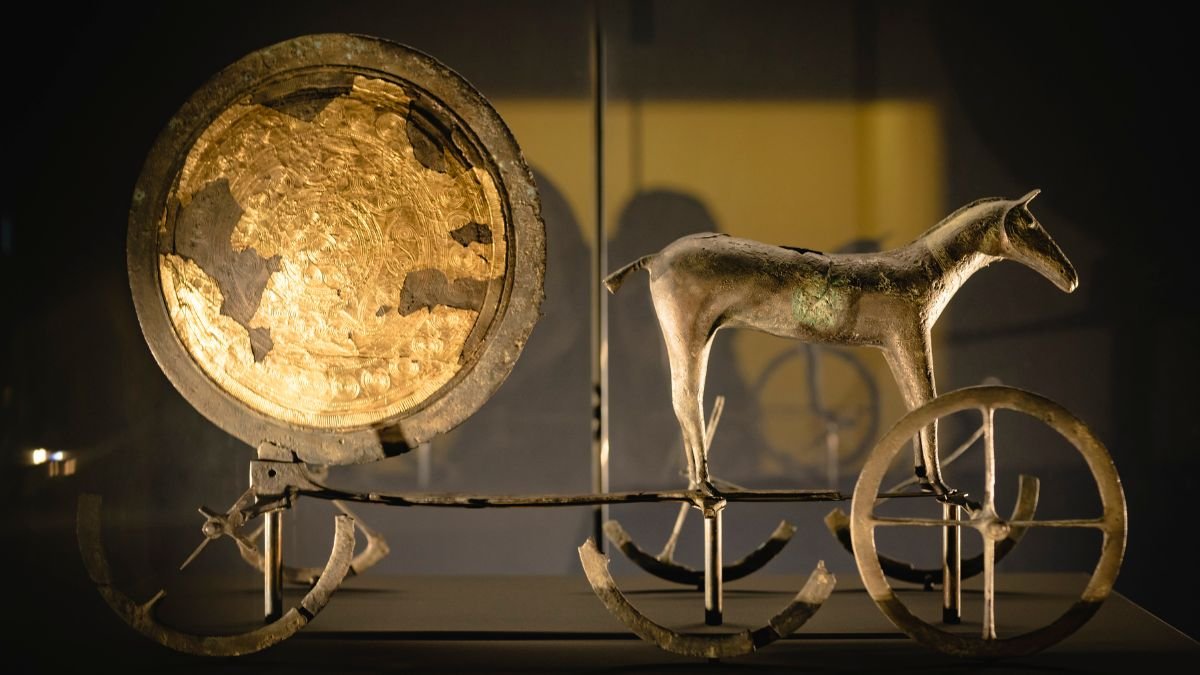
From the moment early humans looked up at the sky, the Sun stood apart from all other celestial bodies. It rose every morning with dependable regularity, brought warmth to cold lands, and made life itself possible. Long before telescopes, science, or written history, ancient civilizations understood one essential truth: without the Sun, nothing survived. This understanding turned the Sun into more than a natural phenomenon. It became a god, a ruler of time, a symbol of power, and the heartbeat of civilizations across continents. Whether in deserts, river valleys, mountains, or islands, the Sun shaped how people farmed, worshipped, governed, and understood the universe.
The Sun as the Source of Life
For ancient societies, survival was directly tied to agriculture, and agriculture depended entirely on sunlight. Crops grew only when the Sun followed its seasonal rhythm. A delayed sunrise or a weakened Sun meant drought, hunger, and death. This daily and seasonal dependence made the Sun the ultimate giver of life. Ancient people did not see sunlight as a simple physical force; they experienced it as a living presence that nurtured the earth. The warmth that ripened grains, the light that guided hunters, and the energy that revived the land after winter all reinforced the belief that the Sun was a divine life force watching over humanity.
The Sun and the Measurement of Time
One of the Sun’s greatest influences was its role in shaping humanity’s understanding of time. Ancient civilizations observed the length of shadows, the changing position of the Sun in the sky, and the pattern of solstices and equinoxes. These observations allowed them to create calendars that guided farming cycles, religious festivals, and political rituals. Time was not abstract; it was solar. The rising and setting of the Sun divided day and night, while its yearly journey defined seasons. By tracking the Sun, societies gained control over uncertainty, turning chaos into predictable order.
Solar Gods and Divine Authority
Across the world, the Sun became a god or the embodiment of divine power. In ancient Egypt, the Sun god Ra sailed across the sky by day and through the underworld by night, ensuring cosmic balance. Pharaohs claimed descent from Ra, using the Sun to legitimize their rule. In Mesopotamia, Shamash represented justice and truth, shining light on both righteousness and wrongdoing. In the Americas, the Inca worshipped Inti, believing their emperor was the Sun’s chosen representative on Earth. By connecting rulers to the Sun, civilizations reinforced political authority with divine legitimacy, making rebellion not just illegal but sacrilegious.
Architecture Aligned with the Sun
The importance of the Sun is carved into stone across the ancient world. Temples, pyramids, and monuments were carefully aligned with solar events. Stonehenge in England marks the summer solstice sunrise, while temples in Egypt were designed so sunlight illuminated sacred chambers on specific days. In Mesoamerica, pyramids cast serpent-shaped shadows during equinoxes, blending architecture with cosmic drama. These structures were not merely buildings; they were instruments that captured sunlight, transforming it into a visible sign of harmony between humans and the universe. Such precision shows that solar observation was both a scientific and spiritual pursuit.
The Sun and Moral Order
Light has always symbolized truth, and darkness has often represented danger or chaos. Ancient civilizations naturally linked this symbolism to the Sun. As the bringer of light, the Sun became associated with morality, justice, and balance. Laws were believed to be overseen by solar deities who witnessed all actions from the sky. Nothing could be hidden from the Sun’s gaze. This belief encouraged social order, honesty, and accountability. Living in harmony with the Sun meant living in harmony with moral law.
Seasonal Rituals and Solar Festivals
Solar cycles shaped religious life just as deeply as agriculture. Solstices and equinoxes were celebrated with festivals, sacrifices, dances, and prayers. These rituals expressed gratitude for the Sun’s generosity and fear of its absence. Winter solstice celebrations often symbolized rebirth, marking the return of longer days after darkness. Summer solstice rituals honored abundance and strength. Through these celebrations, communities reinforced shared beliefs and collective identity, uniting people under the same sky and the same Sun.
The Sun as a Symbol of Renewal
Beyond daily life, the Sun represented the promise of renewal. Each sunrise mirrored the idea of rebirth, reinforcing hope even in difficult times. This symbolism deeply influenced myths about death and the afterlife. Many cultures believed the Sun’s nightly journey through darkness reflected the soul’s journey after death. Just as the Sun returned each morning, so too could life emerge again. This belief offered comfort, explaining mortality within a larger cosmic cycle rather than as an end.
Knowledge, Astronomy, and Solar Observation
Ancient civilizations were far more scientifically aware than often assumed. Priests, astronomers, and scholars studied the Sun with remarkable accuracy. They calculated eclipses, tracked solar paths, and predicted seasonal changes. This knowledge was powerful, often guarded by elite groups who used it to advise rulers and guide societies. Understanding the Sun meant understanding nature itself. It blurred the line between science and religion, as solar knowledge was both practical and sacred.
Cultural Unity Under One Sun
Despite vast differences in geography and culture, civilizations across the world shared strikingly similar solar beliefs. This universal reverence reveals a shared human experience. No matter where people lived, the Sun governed their days, warmed their homes, and fed their children. It became a unifying symbol of existence itself. The Sun reminded humanity of its place within a larger cosmos, fostering humility as well as wonder.
The Sun’s Legacy in the Modern World
Although modern science explains the Sun through physics rather than mythology, its influence remains deeply rooted in culture, language, and tradition. Holidays, symbols, and even national flags still reflect solar imagery. The ancient instinct to look to the Sun for meaning has not disappeared; it has evolved. Today, solar energy represents sustainability and hope for the future, echoing the ancient belief that the Sun is the ultimate provider.
Conclusion: Humanity’s Eternal Relationship with the Sun
The Sun was central to ancient civilizations because it touched every aspect of life, from survival and timekeeping to spirituality and governance. It was a teacher, a ruler, a guardian, and a symbol of eternal renewal. Ancient people did not worship the Sun out of ignorance but out of deep observation and lived experience. They recognized that their lives were woven into the Sun’s rhythm. Even in a modern world shaped by technology, humanity remains bound to the same star that guided our ancestors. The Sun continues to rise, just as it always has, reminding us that while civilizations change, our connection to the source of life endures.
Leave a Reply