
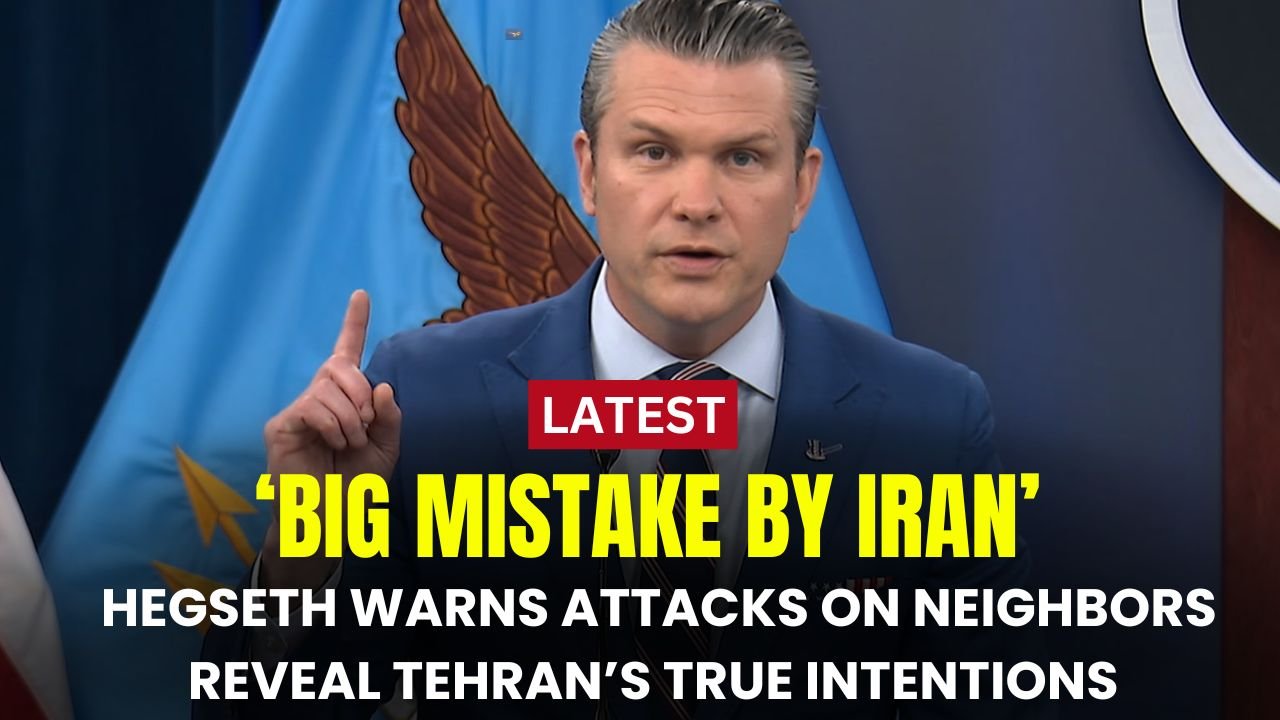
This comes in the midst of increased tensions in the Middle East as the US Defense Secretary Pete Hegseth gave a stern warning to Iran stating that attacking the surrounding countries is a big mistake. In a press conference at the Pentagon on Tuesday, he asserted that the Iranian regime targeting of neighboring nations does not only pose a threat to the stability in a region, but also provokes other nations to get more firmly on the side of the US.
Hegseth clarified that the strategic weakness of Iran is shown by its random attacks. In his opinion, these aggressive actions at this stage of the war are indicative of a rushed and unstable reaction of the Iranians.
Missile and Drone Attacks on Arab Countries
On Tuesday, some countries in the Middle Eastern region alleged to have been the target of the Iranian ballistic missile attacks and drone attacks. These are Qatar, Kuwait, Saudi Arabia, Bahrain and the United Arab Emirates. Through various defense systems, these countries have asserted to have killed a number of missiles and drones.
A fire at the Ruwais Industrial Complex in Abu Dhabi, the capital of the United Arab Emirates happened as a result of an Iranian drone attack. The region is also famous in terms of oil plants, which are the headquarters of big divisions of the Abu Dhabi National Oil Company.
Tensions escalate after joint US and Israeli operations

The situation also worsened when the US and Israel had an initiative to counterattack on February 28. This was followed by Iranian attacks being reported against several countries including Jordan, Turkey, Iraq, Oman and other Gulf countries.
At the same time, the former US president Donald Trump also spoke about the situation. He claimed that he was shocked to see Iran going against nations that were not going against them. Trump claimed that the US attacks destroyed around half of the Iranian missile ability, which influenced the development of the war.
Conflicting Statements Within the US Administration
However, differing statements have emerged within the US administration regarding this conflict. President Trump repeatedly stated that Iran posed an “immediate threat” to the US and its allies. Meanwhile, US Secretary of State Marco Rubio stated that the real concern was a potential retaliatory attack by Iran, especially if Israel was preparing to launch a first strike.
Deep Impact on Regional Security
The security situation in the Middle East has been made difficult due to the ongoing tensions in the region. A high number of countries have turned on their air defenses and are ever ready. Observers feel that unless this war is ended, there is a possibility that it may affect world politics and energy market.
International community is presently observing to determine the success of the diplomatic efforts that may be put to diffuse this crisis in the next few days.
FAQs
Q1. Why did the U.S. criticize Iran’s actions?
U.S. Defense Secretary Pete Hegseth said Iran made a “big mistake” by attacking neighboring countries, which could push those nations closer to the United States.
Q2. Which countries reported Iranian missile or drone attacks?
Countries including Qatar, Kuwait, Saudi Arabia, Bahrain, and the United Arab Emirates reported being targeted by Iranian missiles and drones.
Q3. What happened in Abu Dhabi during the attack?
Authorities said an Iranian drone attack caused a fire at the Ruwais Industrial Complex, an area linked to major oil facilities.
Q4. What did Donald Trump say about the attacks?
Donald Trump said he was surprised that Iran attacked countries that were not directly attacking it.
Q5. When did the U.S.–Israel military operation begin?
The joint U.S.–Israel military operation against Iran began on February 28, which increased tensions across the Middle East.
Leave a Reply