
Today, we view the sun as a giant nuclear furnace, generating energy by converting hydrogen into helium. But for ancient civilizations, the sun was more than just a celestial body. It was the giver of life, the creator of time, and the foundation of cosmic balance. Cultures like the Maya and Pueblo not only worshipped the sun but also lived in harmony with it. They integrated its rising and setting, its direction, its shadows, and its warmth into the very fabric of their religion, agriculture, and society.
What scientists today are trying to understand with the help of supercomputers and satellites, these ancient people had already grasped thousands of years ago through observation, experience, and calculation.
The Sun God Kinich Ahau in Maya Civilization
For the Maya people, the sun was not an inanimate star but a living deity they called Kinich Ahau. This deity was considered not only the giver of light but also the master of life, power, and time. Maya kings believed they were descendants of Kinich Ahau. This belief granted them divine authority to rule. The people considered them not ordinary humans but representatives of the sun on Earth.
The sun’s daily journey was a spiritual narrative for them. During the day, it traveled across the sky as a burning boat or a fiery bird, and at night, it transformed into a powerful jaguar, traversing the underworld of Xibalba. Its rising each morning symbolized the victory of life over darkness.
The Sun and the Calculation of Time
The Maya civilization was renowned for its sophisticated calendar system. Their calendar was not merely a way to track dates but a tool for understanding the workings of the universe. They knew the sun’s position at any given time and used this knowledge to determine agricultural cycles, religious rituals, and social events.
For them, time was not a linear progression but a cycle, revolving with the sun. As the sun changed its position, the direction of life itself shifted with it.
The Sun and Maya Architecture
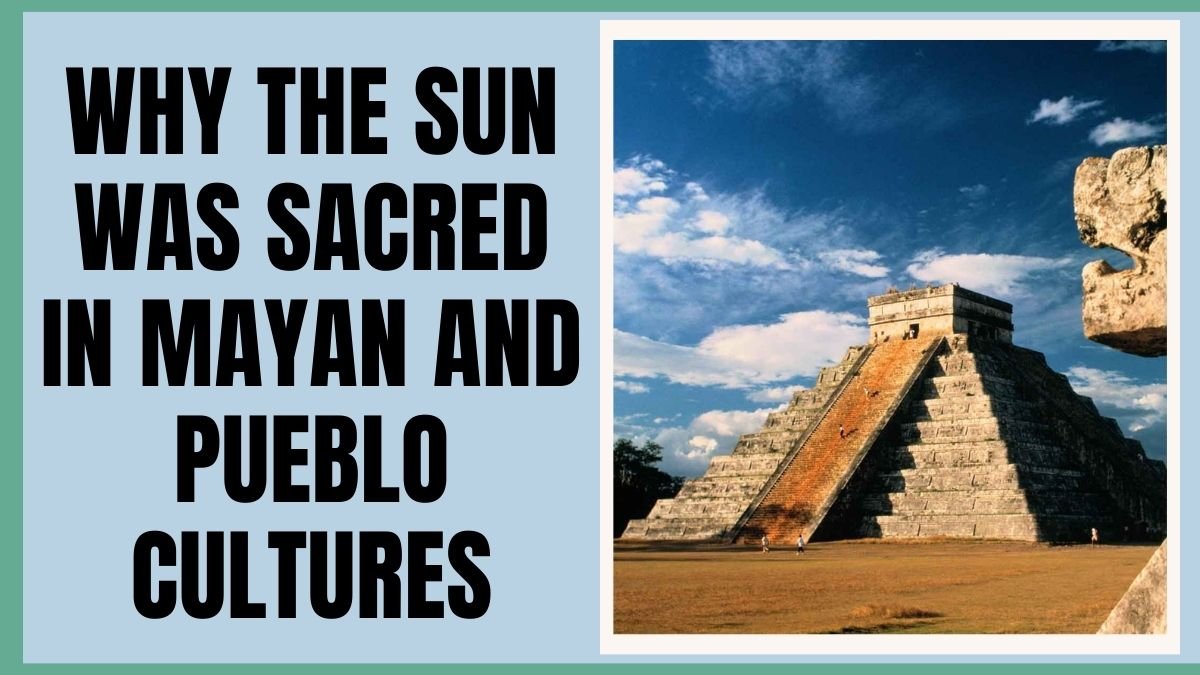
The Maya people didn’t just observe the sky; they captured the sun in stone. The famous pyramid of Chichen Itza is a prime example. On the equinox, when the sun is at a specific angle, its light creates a shadow on the steps that resembles a moving serpent. This spectacle was not only beautiful but also served as a signal to farmers, indicating the time for planting or harvesting.
This demonstrates the profound knowledge that Mayan architects and astronomers possessed regarding the sun’s movements. They designed their buildings in such a way that the sun itself became a timekeeper.
The Responsibility of Sustaining the Sun
The Maya believed that the sun had to travel through the underworld every night, where it faced dangers. Especially during eclipses, they feared the sun might weaken or even disappear. Therefore, they performed blood sacrifices and other rituals to ensure the sun’s continued strength.
In their view, this wasn’t cruelty but a necessary act to maintain cosmic balance. If the sun stopped, life itself would cease.
The Sun Father in Pueblo Culture
In the Pueblo cultures of North America, the sun was called the Sun Father. For them, the sun was not merely a source of light but the driving force behind their entire society. Their religious leaders observed the sun’s position daily and determined the timing of religious ceremonies and agricultural activities accordingly.
Their calendar wasn’t written in a book but inscribed in the rising and setting of the sun on the horizon.
The Sun, Balance, and Life
The famous Sunface symbol of the Zuni culture illustrates that the sun represents balance. The line between sunrise and sunset signifies that life continues only when both light and darkness are respected.
Communities like the Hopi performed daily rituals for the sun, ensuring its continued power and the sustenance of life on Earth.
Conclusion
Civilizations like the Maya and Pueblo didn’t just observe the sun; they understood it, felt its presence, and integrated it into their lives. Their knowledge continues to amaze modern science, as they achieved an understanding without any modern instruments that we now measure with satellites. Perhaps this is why the legacy of ancient civilizations still sheds new light on us today.
Leave a Reply