
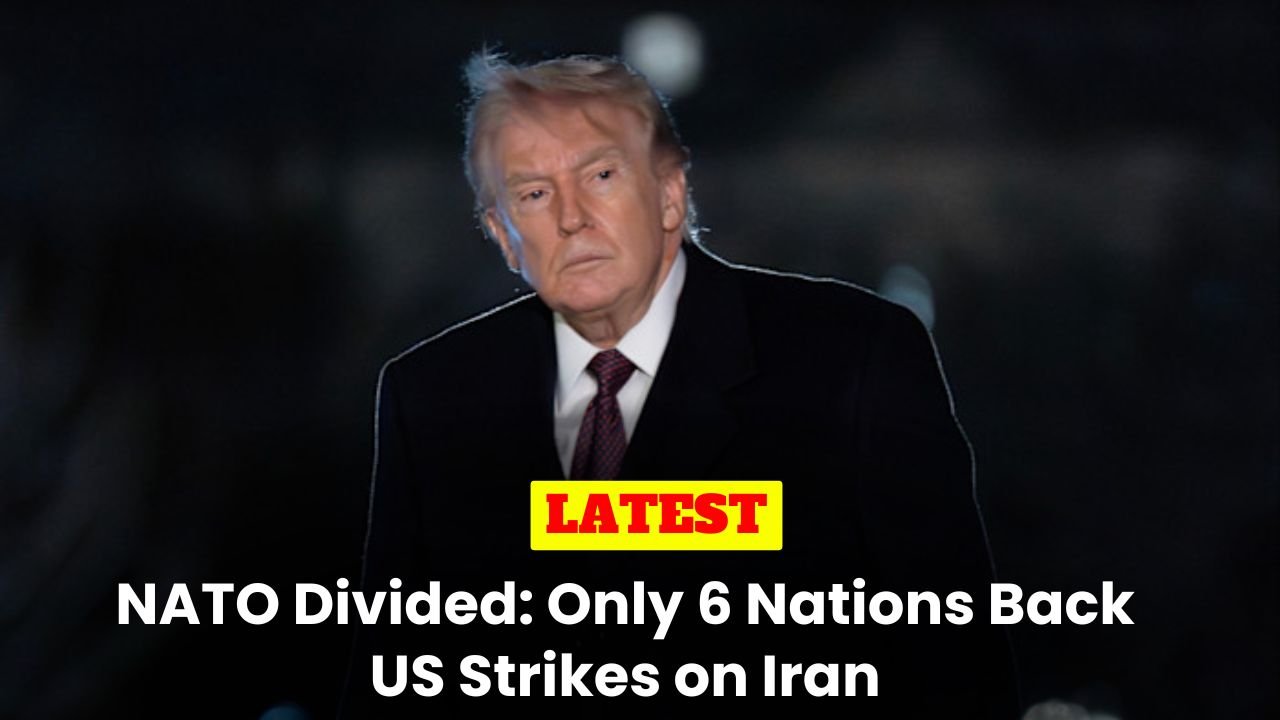
Amidst escalating tensions in the Middle East, the strikes launched by the United States against Iran have brought global politics to a critical juncture. However, the most striking aspect this time around is the deep discord emerging from within the powerful military alliance—NATO. While some nations have sided with the US, several key European countries have chosen to distance themselves from the action.
Limited Support: Why Only a Few Nations Stepped Up
According to reports, only a handful of NATO member states have openly come forward to support the United States. This number is reported to be extremely limited, making it evident that the unity within the alliance is no longer what it once was.
Some nations believe that Iran’s escalating military activities and nuclear threat pose a grave challenge to global security; consequently, they view the US action as a “defensive measure.” However, this support is far from unanimous, and several countries have expressed their reservations regarding the move.
Europe’s Dissent: “This Is Not Our Fight”
On the other hand, several major European nations have openly opposed this move by the United States. Their leaders contend that this conflict is not directly linked to their own security interests and that military involvement in it could prove to be risky.
According to reports, countries such as Germany, France, and the United Kingdom have clearly stated that they do not wish to get involved in this conflict and will prioritize a diplomatic resolution.
This stance not only poses a challenge to the United States but also raises questions regarding the very unity of NATO.
Strategic Divergence and Growing Distance
The discord within NATO is not limited to a single military decision; rather, it reflects a broader divergence in strategic thinking. While the United States appears inclined toward adopting an aggressive policy, European nations are placing greater emphasis on peace negotiations and regional stability.
Furthermore, many nations are concerned that such strikes—executed without a clear strategy—could further inflame regional conflicts, potentially impacting both the global economy and energy supplies.
Global Impact and Future Challenges
Attacks on Iran—and its retaliatory measures—have already begun to impact the oil market and international trade.
Against this backdrop, the widening rift within NATO could cast doubt on the alliance’s future effectiveness. If member states fail to remain united, mounting a collective response to any major global crisis could prove difficult.
Conclusion
The US attacks on Iran have made it abundantly clear that NATO is no longer as united as it once was. The fact that only a few nations offered support while the rest voiced opposition signals that global politics is shifting toward a new equilibrium. In the days ahead, it will be intriguing to observe whether NATO can resolve its internal differences or if this divide continues to deepen.
FAQs
1. Why are only a few NATO countries supporting the US strikes on Iran?
Because many NATO members disagree on military action and prefer diplomatic solutions instead of escalating conflict.
2. Which countries opposed the US strikes?
Major European nations like Germany, France, and the UK have shown reluctance or opposition to direct involvement.
3. What does this division mean for NATO?
It highlights internal disagreements and could weaken NATO’s unity in handling global crises.
Leave a Reply