
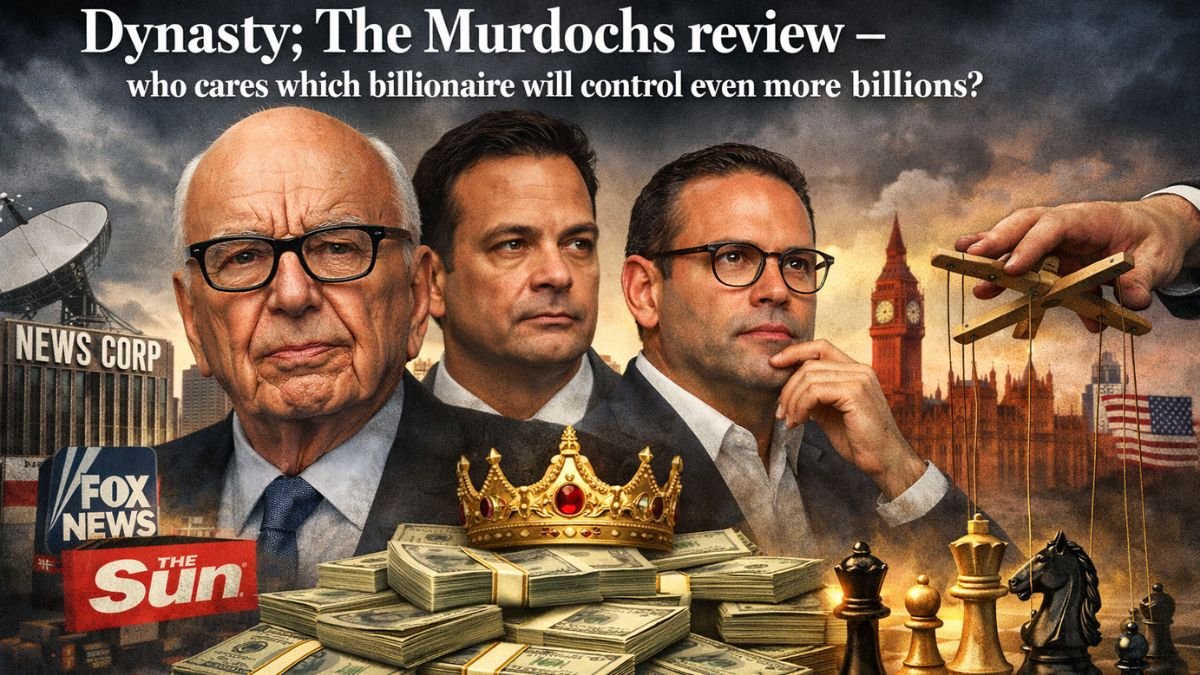
The documentary series “Dynasty: The Murdochs” attempts to pull back the curtain on one of the most powerful media families in the world. Centered on the legacy of Rupert Murdoch and the intense competition among his children, the series explores the inner workings of a global media empire that has shaped politics, journalism, and public opinion for decades. At first glance, the story promises a dramatic exploration of family rivalry, power struggles, and the immense responsibility that comes with controlling billions of dollars and major media outlets.
Yet, while the show reveals fascinating details about the Murdoch family’s influence, it also raises a more complicated question. Why should ordinary viewers care about which billionaire ends up controlling even more billions? For many audiences, the stakes of this internal family drama feel distant from their everyday lives. Despite the spectacle of power and wealth, the emotional connection can feel surprisingly thin.
The Rise of a Global Media Dynasty
To understand the significance of the documentary, it helps to look at the extraordinary rise of the Murdoch empire. Rupert Murdoch built his business from a relatively small Australian newspaper inheritance into a global media powerhouse. Over several decades, his companies expanded into television networks, film studios, publishing houses, and digital platforms.
Organizations like News Corporation and Fox Corporation became central pillars of the Murdoch media empire. These companies own influential newspapers, television channels, and online outlets that reach hundreds of millions of people worldwide. Through these platforms, the Murdoch family gained not only immense wealth but also significant political and cultural influence.
The documentary effectively illustrates how this expansion reshaped the global media landscape. It shows how Murdoch’s relentless business strategy, sharp instincts, and willingness to take risks helped him dominate the industry. At the same time, critics argue that this dominance concentrated too much media power in the hands of one family.

A Family Drama at the Heart of the Empire
At its core, “Dynasty: The Murdochs” is less about media economics and more about family dynamics. The documentary explores the complicated relationships between Rupert Murdoch and his children, particularly Lachlan Murdoch, James Murdoch, and Elisabeth Murdoch.
Each of them represents a different vision for the future of the Murdoch empire. Lachlan, often viewed as the heir apparent, has maintained close ties to the existing leadership style and political orientation of the company. James, on the other hand, has sometimes taken positions that differ sharply from the traditional Murdoch approach, particularly regarding media responsibility and climate issues.
These differences create tension that runs throughout the series. The documentary suggests that the fight for control is not simply about money but also about ideology, identity, and legacy. Who inherits the empire may ultimately shape the direction of some of the most influential media outlets in the world.
Still, for many viewers, this rivalry can feel like a battle between extremely privileged individuals whose concerns are far removed from everyday struggles.
The Billionaire Succession Question
Succession stories have always fascinated audiences, especially when they involve enormous fortunes and powerful corporations. The Murdoch saga fits neatly into this tradition. The idea that a single decision about inheritance could determine the direction of global media companies makes for compelling drama.
However, the documentary occasionally struggles to make the stakes feel meaningful for a broader audience. While the family’s internal conflicts are dramatic, they often revolve around control of wealth that is almost impossible for ordinary people to imagine.
When billions of dollars are already at stake, the difference between one billionaire winning or another winning can seem insignificant to viewers outside the world of corporate power. This is the central tension of the documentary. It tries to present the Murdoch succession as a monumental story, yet many people may wonder whether it truly matters who ends up with the empire.
Media Power and Its Real-World Consequences
Despite this skepticism, the documentary makes an important point about the influence of media ownership. The Murdoch companies do far more than simply generate profits. They shape political debates, influence elections, and frame public narratives around major global events.
Outlets like Fox News and newspapers under News Corporation have played major roles in political discourse in countries such as the United States, the United Kingdom, and Australia. Because of this influence, the leadership of the Murdoch empire carries real consequences for journalism and public opinion.
From this perspective, the documentary’s focus on succession becomes more understandable. The person who ultimately controls these companies could shape editorial direction, political messaging, and the future of media coverage across multiple continents.
The Limits of Billionaire Narratives
Even with this context, the series sometimes struggles to escape a broader problem in modern storytelling: the fascination with billionaires. In recent years, documentaries, television shows, and films have increasingly focused on the lives of ultra-wealthy individuals.
These stories often promise insight into the hidden world of power and privilege. Yet they can also risk reinforcing the idea that the most important stories belong to the richest people on the planet. For many viewers, watching yet another tale of billionaire conflict can feel repetitive or disconnected from real social concerns.
The Murdoch documentary occasionally falls into this trap. Instead of deeply examining how media power affects society, it sometimes focuses more heavily on family rivalries and corporate maneuvering.
A Portrait of Legacy and Ambition
One of the most compelling aspects of the series is its exploration of Rupert Murdoch himself. As a businessman, Murdoch built a media empire that changed the industry forever. As a father, however, his legacy appears far more complicated.
The documentary portrays him as a figure driven by ambition and competition, qualities that helped him succeed in business but also created tension within his family. The question of succession becomes not just a financial matter but a deeply personal one.
Who will carry forward Murdoch’s vision? Will the next generation preserve his aggressive business approach, or will they reshape the empire in response to changing social and political expectations? These questions give the documentary emotional weight, even when the financial stakes feel distant.
Public Perception and Media Responsibility
Another key theme explored in the series is the growing debate about media responsibility. In an era of political polarization and misinformation concerns, many people are questioning the role that large media corporations play in shaping public narratives.
Some critics argue that concentrated media ownership can distort democratic discourse. Others believe strong editorial voices are essential to a healthy marketplace of ideas. The Murdoch empire sits directly at the center of this debate.
Because of this, the documentary’s examination of the family’s internal power struggle carries implications beyond simple wealth distribution. The leadership of such a powerful media organization could influence how news is reported and interpreted around the world.

Why the Story Still Matters
Even if some viewers feel detached from the personal wealth of the Murdoch family, the broader story still matters. The documentary highlights how a single family’s decisions can influence massive corporations that shape global communication.
Media companies are not just businesses; they are institutions that shape public knowledge. The leaders of these organizations determine which stories are told, how they are framed, and which voices receive attention.
In that sense, the question of succession within the Murdoch empire is not purely a billionaire drama. It is also a story about the future direction of powerful media platforms and the role they play in democratic societies.
Conclusion
“Dynasty: The Murdochs” offers a fascinating look at one of the most influential media families in modern history. The documentary succeeds in revealing the ambition, rivalry, and strategic decisions that built an enormous media empire.
At the same time, it leaves viewers with an uncomfortable question. In a world facing economic inequality, political division, and social challenges, how much attention should be devoted to the internal battles of billionaires?
The answer likely lies somewhere in between fascination and skepticism. The Murdoch story is undeniably dramatic and historically significant. Yet it also reflects a broader cultural obsession with wealth and power.
Ultimately, the documentary reminds us that behind every massive corporation lies a complex human story. Whether viewers care deeply about the Murdoch succession or not, the series provides a rare glimpse into how family dynamics, ambition, and media influence intersect at the highest levels of global power.
FAQs
Q1. What is “Dynasty: The Murdochs” about?
“Dynasty: The Murdochs” is a documentary series that explores the rise of the Murdoch media empire and the family’s internal power struggles over who will control it in the future.
Q2. Who founded the Murdoch media empire?
The global media empire was built by Rupert Murdoch, who expanded a small Australian newspaper business into a worldwide media network.
Q3. Why is the Murdoch succession important?
The succession matters because the Murdoch family controls major media companies, and the next leader could influence global news, politics, and media direction.
Leave a Reply