
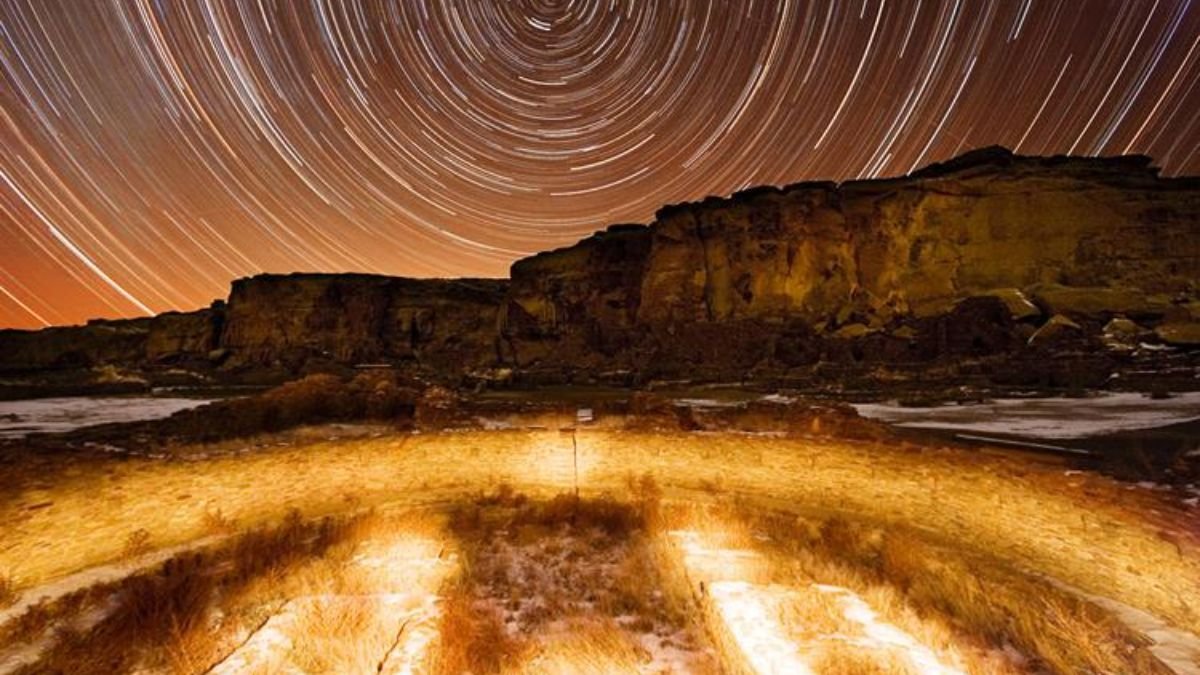
Chaco Canyon, located in present-day northwestern New Mexico, stands as one of the most remarkable archaeological landscapes in North America. Between roughly 850 and 1250 CE, it was the cultural heart of the Ancestral Puebloan world. Massive stone buildings, carefully planned road systems, and precisely aligned structures reveal a society with deep scientific understanding and spiritual awareness. Among the most fascinating aspects of Chaco Canyon is the evidence of deliberate sun alignments. These alignments show that the Ancestral Puebloans closely studied the Sun and used its movements to organize time, guide ceremonies, and maintain harmony with the natural world.
The Ancestral Puebloans and Their Environment
The Ancestral Puebloans lived in a challenging desert environment where survival depended on understanding seasonal patterns. Rainfall was unpredictable, temperatures varied sharply, and agricultural success relied on precise timing. Corn, beans, and squash formed the foundation of their diet, and planting these crops at the wrong time could mean disaster. This reality pushed the Ancestral Puebloans to become expert observers of the sky. Solar knowledge was not abstract or symbolic alone; it was a practical tool that helped communities thrive in an unforgiving landscape.
The Sun’s Central Role in Puebloan Worldview
For the Ancestral Puebloans, the Sun was far more than a source of light and warmth. It was a sacred force that governed life, growth, and balance. The daily rising and setting of the Sun represented order, while its yearly journey marked the rhythm of the seasons. Solar events such as solstices and equinoxes carried spiritual significance and were moments when the boundary between the human world and the sacred was believed to be especially thin. This deep respect for the Sun motivated careful, long-term observation and architectural planning.
Chaco Canyon as a Solar Landscape
Chaco Canyon itself appears to have been designed as a solar landscape. The canyon walls, mesas, and natural rock formations were not just scenic features but reference points for observing the Sun. The placement of great houses and ceremonial structures often aligns with significant solar events. These alignments suggest that Chaco Canyon functioned as a massive, integrated system where architecture, landscape, and celestial knowledge worked together to track time and reinforce cultural beliefs.
Great Houses and Solar Alignments
The great houses of Chaco Canyon, such as Pueblo Bonito, Chetro Ketl, and Casa Rinconada, demonstrate remarkable precision in their orientation. Many of these structures are aligned along cardinal directions, reflecting careful planning and astronomical awareness. Certain doorways, windows, and walls are positioned to capture sunlight at specific times of the year. During solstices, sunlight illuminates particular interior spaces, signaling important moments in the solar calendar. These effects were intentional and required generations of observation and knowledge transmission.
Solstice Markers and Rock Art
Beyond architecture, some of the most striking evidence of solar knowledge at Chaco Canyon comes from rock art and natural light-and-shadow displays. One famous example is the Sun Dagger site on Fajada Butte. Here, narrow shafts of sunlight pass between rock slabs to create precise patterns on spiral carvings during solstices and equinoxes. These light markers act as a solar calendar, visually demonstrating the Sun’s position throughout the year. Such installations show an extraordinary understanding of solar cycles and an ability to translate that knowledge into enduring stone markers.
The Purpose of Solar Alignments
Solar alignments in Chaco Canyon served multiple purposes. Practically, they helped track the agricultural calendar, indicating when to plant and harvest crops. Socially and spiritually, they structured ceremonial life. Solstices were likely times of communal gatherings, rituals, and renewal. By synchronizing ceremonies with solar events, leaders reinforced social cohesion and cultural identity. Solar knowledge also legitimized authority, as those who understood and interpreted the Sun’s movements held power and respect within the community.
The Role of Ritual and Ceremony
Ceremony was deeply intertwined with solar observation. Kivas, circular ceremonial rooms found throughout Chaco Canyon, may have been used for rituals timed to solar events. The controlled entry of sunlight into these spaces could have enhanced the spiritual experience, creating dramatic moments that reinforced cosmological beliefs. These ceremonies were not isolated religious acts but communal experiences that strengthened shared values and ensured continuity across generations.
Knowledge Transmission Across Generations
The precision seen in Chaco Canyon’s solar alignments indicates long-term planning that extended beyond individual lifetimes. Knowledge of the Sun’s movements was passed down through oral tradition, observation, and hands-on teaching. Elders likely trained younger members to recognize solar patterns and understand their significance. This continuity ensured that alignments remained accurate over centuries, even as environmental and social conditions changed.
Comparison With Other Ancient Solar Traditions
Chaco Canyon’s solar knowledge places the Ancestral Puebloans alongside other ancient cultures known for astronomy, such as the Maya, Egyptians, and Inca. While separated by geography, these civilizations shared a common understanding that the sky held essential knowledge for life on Earth. What makes Chaco Canyon unique is how solar observation was embedded into a vast communal landscape rather than concentrated in a single monument. This suggests a society where astronomical knowledge was widespread and integrated into everyday life.
Scientific Accuracy Without Modern Tools
One of the most impressive aspects of Chaco Canyon sun alignments is their accuracy despite the lack of modern instruments. The Ancestral Puebloans relied on careful naked-eye observation, repeated over many years. By tracking the Sun’s rising and setting points along the horizon, they identified stable reference markers. Over time, patterns emerged that allowed precise predictions. This demonstrates that scientific rigor does not require advanced technology but can emerge from patience, consistency, and deep engagement with nature.
The Decline of Chaco Canyon and Solar Traditions
By the late 12th century, Chaco Canyon’s prominence declined, likely due to prolonged drought, resource stress, and social changes. However, the solar knowledge developed there did not disappear. Descendant Pueblo communities continued to observe the Sun and maintain ceremonial calendars rooted in ancient traditions. This continuity highlights the enduring value of solar knowledge and its role in cultural resilience.
Modern Interpretation and Preservation
Today, archaeologists and researchers continue to study Chaco Canyon’s sun alignments to better understand Ancestral Puebloan society. Modern tools help confirm what ancient builders already knew, revealing the sophistication of their planning. At the same time, preservation efforts aim to protect these fragile sites from damage. Respecting the cultural and spiritual significance of Chaco Canyon is essential, as it remains a sacred place for many Pueblo peoples.
What Chaco Canyon Teaches Us Today
Chaco Canyon offers valuable lessons for the modern world. It shows how close observation of natural cycles can support sustainable living. The Ancestral Puebloans understood that human activity must align with environmental rhythms rather than dominate them. Their solar knowledge reminds us that science and spirituality do not have to be separate but can coexist in meaningful ways.
Conclusion
Chaco Canyon sun alignments reveal a civilization deeply attuned to the movements of the Sun and the rhythms of the Earth. Through careful observation and thoughtful design, the Ancestral Puebloans created a landscape that functioned as both a ceremonial center and a solar calendar. Their ability to use solar knowledge to guide agriculture, ritual, and social life reflects a sophisticated understanding of the natural world. Even centuries later, Chaco Canyon stands as a powerful reminder of humanity’s enduring connection to the sky and the wisdom that comes from living in harmony with it.
Leave a Reply