
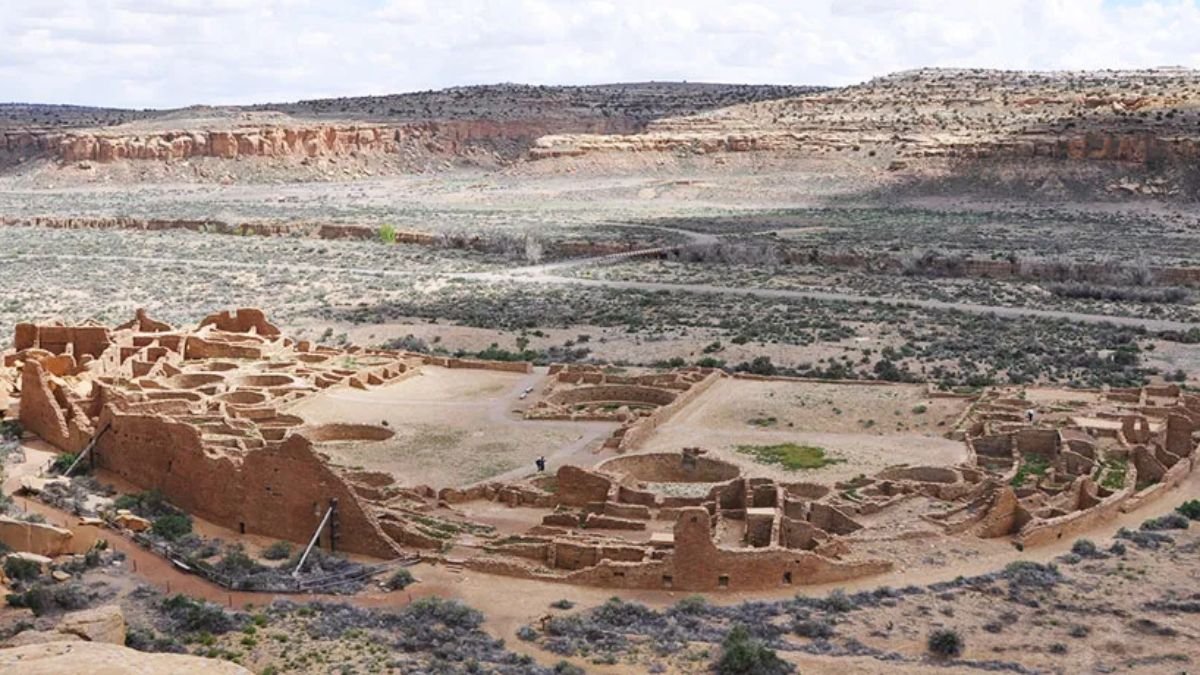
Chaco Canyon, located in the arid landscapes of northwestern New Mexico, is often described as one of the most remarkable archaeological sites in North America. Its massive stone structures, intricate road systems, and complex cultural artifacts provide a window into the lives of the Ancestral Puebloans who inhabited this region from approximately 850 to 1250 CE. Yet beyond its architectural marvels, Chaco Canyon is an extraordinary testament to the astronomical knowledge and sophisticated skywatching practices of these ancient Indigenous peoples. The study of Chaco Canyon’s alignment with celestial events offers deep insight into how the cosmos shaped the spiritual, agricultural, and societal life of the Ancestral Puebloans.
The Astronomical Significance of Chaco Canyon
One of the most striking features of Chaco Canyon is the precise alignment of its buildings and ceremonial structures with astronomical events. Great houses such as Pueblo Bonito, Chetro Ketl, and Casa Rinconada are not random in their orientation; rather, they reflect careful observation of the sun, moon, and stars. Many of these structures are aligned with solstices and equinoxes, suggesting that the Ancestral Puebloans had an intimate understanding of solar cycles. For example, certain doorways and windows allow sunlight to penetrate interior spaces at specific times of the year, marking critical moments such as the winter and summer solstices. These alignments were not merely decorative but likely served as calendars to guide agricultural activities, ceremonial rituals, and social gatherings.
The Chacoans’ attention to lunar cycles is equally impressive. Archaeological studies indicate that some structures were oriented toward lunar standstill positions—a rare astronomical event occurring once every 18.6 years. The ability to track such cycles demonstrates a sophisticated understanding of celestial mechanics and long-term observational astronomy. By integrating lunar and solar observations into their built environment, the Chacoans created a living calendar that helped regulate communal life in harmony with the cosmos.
Casa Rinconada: A Window into the Sky
Casa Rinconada, the largest kiva in Chaco Canyon, provides one of the clearest examples of Indigenous astronomical knowledge. Kivas were subterranean ceremonial chambers, often circular, used for religious and communal purposes. The layout of Casa Rinconada is carefully oriented so that sunlight and shadow play across its walls in alignment with solstices and lunar events. Archaeologists have noted that the kiva’s floor contains niches and features that correspond to specific celestial events, effectively turning the chamber into a type of astronomical observatory.
This connection between architecture and astronomy reflects a worldview in which the heavens were not separate from daily life but intimately intertwined with spiritual and communal activities. For the Chacoans, observing the sky was both a practical and sacred act, guiding planting cycles while also reinforcing cultural narratives and cosmological beliefs.
Roads, Observation Points, and Celestial Alignments
Chaco Canyon is also famous for its extensive road system, stretching over 400 miles to connect outlying communities with the central canyon complex. Some researchers argue that these roads were more than trade or transportation routes—they may have been carefully designed sightlines for astronomical observation. Certain roads appear to align with distant mountain peaks, which themselves mark the rising or setting points of the sun during solstices. This suggests that the Chacoans integrated the natural landscape into their celestial mapping, creating a network of observation points that extended far beyond the canyon walls.
The alignment of roads and structures with celestial events highlights a level of planning and foresight that is remarkable for any ancient culture. It also underscores the importance of astronomy in Chacoan society, influencing settlement patterns, architecture, and ceremonial practices. Through these alignments, the Chacoans maintained a cultural connection to the cosmos, ensuring that their societal rhythms remained in harmony with celestial cycles.
Cultural and Spiritual Dimensions of Chacoan Astronomy
Astronomy in Chaco Canyon was not solely a scientific endeavor; it was deeply woven into the spiritual and cultural life of the Ancestral Puebloans. Celestial events were often linked to myths, rituals, and ceremonies that reinforced community cohesion and identity. For instance, the winter solstice, when daylight is shortest, was likely a time of renewal and reflection, marked by gatherings and ritual performances in ceremonial kivas. Similarly, lunar events such as the major and minor standstills may have been celebrated or observed as markers of time, fertility, and the cycles of life.
The integration of astronomy into ritual spaces illustrates that the Chacoans viewed the cosmos as a living entity, influencing and reflecting human experience. Stars, the sun, and the moon were not distant objects but active participants in the spiritual and social world of Chaco Canyon. Through careful observation and alignment of architecture with celestial events, the Ancestral Puebloans created a tangible connection between earth and sky, allowing the rhythms of the universe to guide human activity.
Modern Research and Technological Insights
Modern archaeological research has expanded our understanding of Chacoan astronomy, often combining traditional excavation with advanced technology such as satellite imaging, 3D modeling, and computer simulations of the night sky. Researchers can now track the paths of the sun and moon across Chaco Canyon as they would have appeared centuries ago, revealing precise alignments that confirm the sophistication of ancient observations. These studies demonstrate that the Chacoans were not merely casual skywatchers but methodical astronomers, capable of predicting solar and lunar events with impressive accuracy.
Moreover, ethnographic studies with descendant Indigenous communities offer valuable insights into the cultural significance of these astronomical practices. Oral traditions and cultural knowledge help contextualize archaeological findings, highlighting the continuity of Indigenous cosmology and its relevance in understanding the past. By combining scientific methods with Indigenous perspectives, researchers gain a richer, more nuanced view of Chaco Canyon as both an archaeological site and a cultural landscape.
Legacy and Lessons from Chaco Canyon
Chaco Canyon continues to inspire wonder, not only for its architectural and artistic achievements but also for its profound insights into ancient Indigenous astronomy. The precision and complexity of its celestial alignments challenge modern assumptions about the scientific capabilities of pre-Columbian societies. It also reminds us that astronomy has long been a human endeavor deeply intertwined with culture, spirituality, and daily life.
Studying Chaco Canyon encourages a broader appreciation for Indigenous knowledge systems, which often integrate observation, intuition, and ritual in ways that differ from Western scientific approaches but are no less rigorous. These systems offer lessons in sustainability, adaptability, and the interconnectedness of human and natural cycles—lessons that remain relevant today as we navigate environmental and societal challenges.
Conclusion
Chaco Canyon stands as a remarkable testament to the ingenuity and astronomical sophistication of the Ancestral Puebloans. Its buildings, kivas, roads, and ceremonial spaces reveal a culture that observed the sky with precision and reverence, integrating celestial knowledge into every facet of life. By studying Chaco Canyon, we gain not only an understanding of ancient Indigenous astronomy but also a deeper appreciation for the ways in which humans have long looked to the heavens for guidance, inspiration, and connection. The legacy of Chaco Canyon is a reminder that the stars have always been more than distant lights in the sky—they are part of the human story, guiding us across time and space, connecting past and present in ways both profound and enduring.
Leave a Reply