
Long before telescopes, satellites, and scientific equations, human beings were already looking up at the sky with wonder, curiosity, and deep respect. The Sun, in particular, was not just a glowing object in the heavens but a powerful force that governed life, seasons, agriculture, and belief systems. Across continents and civilizations, ancient people built monuments, temples, and stone structures that aligned precisely with the Sun’s movements. These alignments were not accidental. They were the result of careful observation, generational knowledge, and a profound connection between humanity and the cosmos. The study that seeks to understand this ancient relationship between the sky and human-made structures is known as archaeoastronomy.
Understanding Archaeoastronomy as a Discipline
Archaeoastronomy sits at the intersection of astronomy, archaeology, anthropology, and history. It examines how ancient cultures understood celestial phenomena and how that understanding shaped their architecture, rituals, and daily lives. Unlike modern astronomy, which relies on advanced instruments, archaeoastronomy focuses on naked-eye observations made over centuries. These observations were encoded into stone, earth, and ritual spaces. By studying the orientation of monuments and their alignment with solar events like solstices and equinoxes, researchers attempt to reconstruct how ancient societies perceived time, space, and the universe.
The Central Role of the Sun in Ancient Life
For ancient civilizations, the Sun was the ultimate timekeeper. It determined when to plant crops, when to harvest, and when to prepare for harsh seasons. The annual cycle of the Sun’s rising and setting points along the horizon was carefully tracked. Over time, people noticed patterns: the longest day, the shortest day, and the moments when day and night were equal. These solar milestones became sacred markers. Aligning structures with the Sun was not merely scientific; it was spiritual, agricultural, and social all at once.
Solar Alignments and Monumental Architecture
One of the most fascinating aspects of archaeoastronomy is how massive stone structures were built with astonishing precision. Without compasses or modern measuring tools, ancient builders managed to align doorways, corridors, and pillars with specific solar events. On particular days of the year, sunlight would penetrate deep into a temple or illuminate a sacred symbol carved in stone. These moments were often rare, occurring only once or twice a year, which made them powerful and symbolic experiences for the people who witnessed them.
Stonehenge and the Language of the Sun
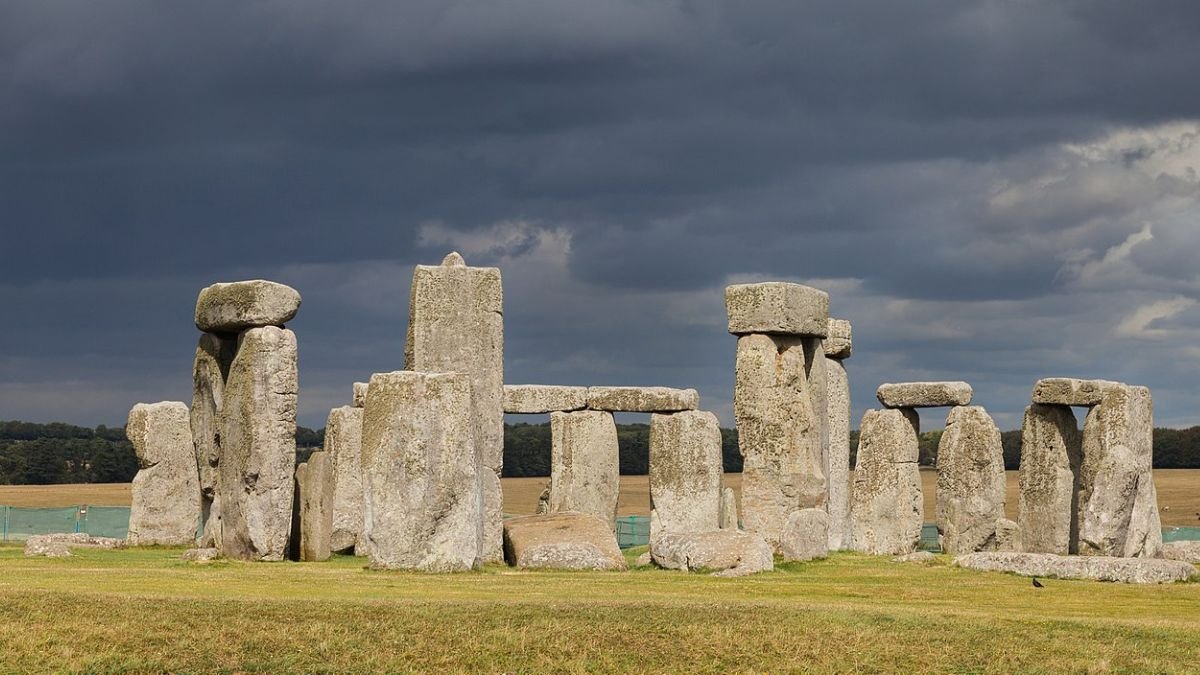
Stonehenge stands as one of the most iconic examples of solar alignment. Located in present-day England, this prehistoric monument aligns with the sunrise of the summer solstice and the sunset of the winter solstice. When the Sun rises on the longest day of the year, its rays pass directly over the Heel Stone and into the center of the stone circle. This alignment suggests that Stonehenge was not just a burial ground or gathering place, but a solar calendar carved into the landscape. It reflected an understanding of the Sun’s yearly journey and its importance to community life.
Solar Temples of the Ancient World
Across the globe, similar solar alignments appear in vastly different cultures, hinting at a shared human fascination with the Sun. In ancient Egypt, temples were often aligned so that sunlight would illuminate the statue of a deity on a specific day, usually associated with a king’s coronation or a religious festival. These moments symbolized divine approval and cosmic order. The Sun was seen as a manifestation of divine power, and aligning temples with its path reinforced the connection between rulers, gods, and the universe.
The Americas and Solar Precision
In the ancient civilizations of the Americas, solar alignments reached remarkable levels of sophistication. Structures were designed so that during solstices or equinoxes, shadows would form symbolic shapes or light would travel along specific architectural features. These visual effects were not decorative; they conveyed meaning, marked time, and reinforced myths. The Sun was deeply woven into stories of creation, destruction, and rebirth. By controlling light and shadow, these cultures turned architecture into a living calendar and a storytelling medium.
Astronomy Without Instruments
What makes these achievements even more extraordinary is that they were accomplished without modern technology. Ancient observers relied on patience, memory, and oral tradition. Observations were passed down through generations, refined slowly as errors were corrected and patterns became clearer. Horizon markers, natural landmarks, and repeated rituals helped ancient astronomers maintain accuracy. Over centuries, this knowledge became embedded in culture, myth, and stone, allowing communities to synchronize their lives with celestial rhythms.
Spiritual Meaning Behind Solar Alignments
Solar alignments were rarely just practical tools. They carried deep symbolic meaning. The Sun was often associated with life, death, renewal, and divine authority. The winter solstice, when days begin to grow longer, symbolized hope and rebirth. The summer solstice represented abundance and power. By aligning sacred spaces with these moments, ancient societies created physical reminders of cosmic balance. Standing inside a temple as sunlight flooded the inner chamber would have been a deeply emotional and spiritual experience, reinforcing belief systems and social unity.
Social Organization and Collective Effort
Constructing solar-aligned monuments required collective effort, planning, and shared purpose. These projects likely took decades or even generations to complete. Their existence suggests strong social organization and leadership capable of mobilizing labor and preserving knowledge over time. Archaeoastronomy, therefore, also reveals insights into ancient social structures. It shows how science, religion, and governance were deeply interconnected, each reinforcing the other through monumental architecture.
Decoding the Past Through Modern Science
Modern researchers use tools like satellite imagery, computer simulations, and astronomical software to test alignment theories. By recreating ancient skies and comparing them with architectural orientations, scientists can determine whether alignments were intentional or coincidental. While debates continue, many alignments are too precise and too consistent to be accidental. Each discovery adds another layer to our understanding of how ancient people perceived the universe and their place within it.
Challenges and Misinterpretations
Archaeoastronomy is not without controversy. Interpreting intent from stone and soil is complex, and there is always a risk of projecting modern ideas onto ancient cultures. Scholars must balance imagination with evidence, respecting cultural context and archaeological data. When done carefully, archaeoastronomy becomes a powerful tool for understanding the human past rather than romanticizing it.
Why Archaeoastronomy Still Matters Today
In a modern world dominated by artificial light and digital timekeeping, archaeoastronomy reminds us of a slower, more attentive way of living. Ancient people watched the sky not out of curiosity alone, but out of necessity and reverence. Their monuments stand as reminders that humanity once lived in close harmony with natural cycles. Studying these alignments encourages reflection on our relationship with nature and time in the present age.
Conclusion: A Timeless Dialogue Between Earth and Sky
Archaeoastronomy reveals that ancient sun alignments were far more than architectural curiosities. They were expressions of knowledge, belief, and identity carved into the landscape. Through stone circles, temples, and shadow-play, ancient civilizations held a dialogue with the cosmos, using the Sun as their guide. These structures continue to speak across millennia, reminding us that the desire to understand the universe is deeply rooted in human history. By studying archaeoastronomy, we do not just learn about ancient science; we reconnect with a timeless human instinct to look up, observe, and find meaning in the light of the Sun.
Leave a Reply