
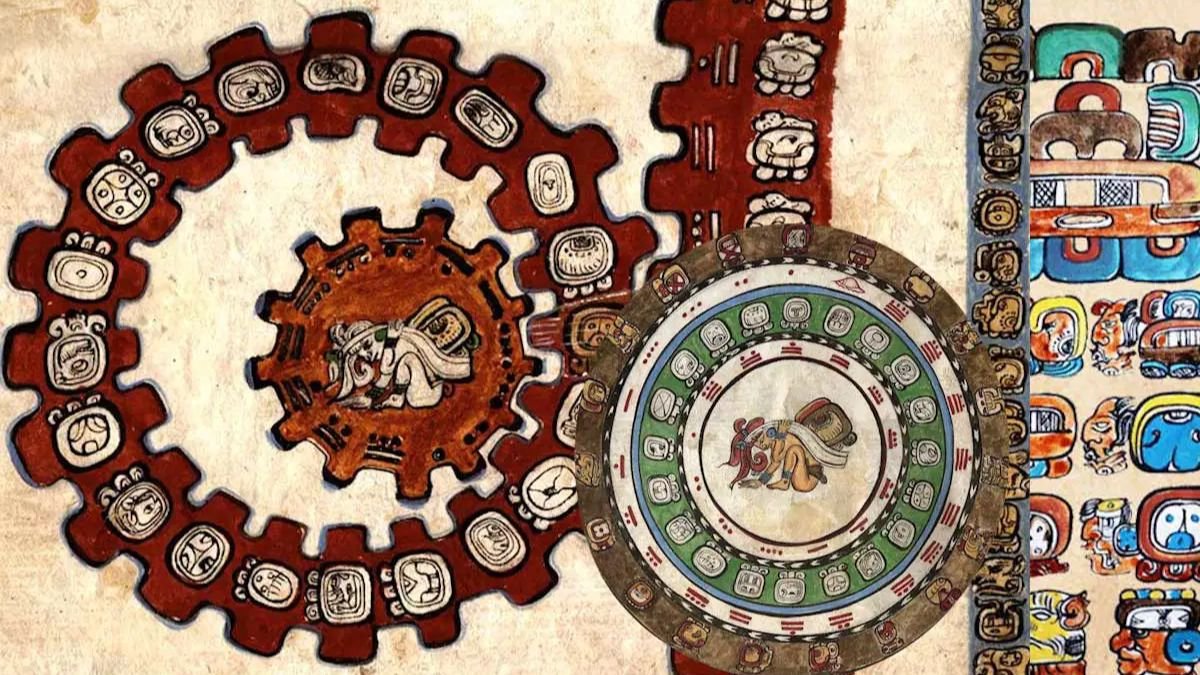
The Maya civilization, flourishing across present-day Mexico, Guatemala, Belize, Honduras, and El Salvador, had a remarkable understanding of time. Unlike modern calendars, the Maya measured time not merely by the passing of days but through cycles of the Sun, Moon, planets, and stars. Central to their system was the Mayan calendar, a sophisticated tool that tracked both solar cycles and ritual events. By observing the Sun and other celestial bodies, the Maya could predict agricultural seasons, organize religious ceremonies, and maintain societal order. The intertwining of astronomy and daily life reveals a culture in which time, nature, and spirituality were inseparable.
The Structure of the Mayan Calendar
The Mayan calendar consisted of multiple interlocking cycles, the most prominent of which were the Haab, a 365-day solar calendar, and the Tzolk’in, a 260-day ritual calendar. The Haab closely mirrored the solar year, allowing the Maya to align their agricultural activities with the Sun’s seasonal movements. The Tzolk’in, meanwhile, was used for religious ceremonies, divination, and social organization. These calendars were not isolated systems; they worked together in the Calendar Round, a 52-year period in which the two cycles would realign. By combining solar observation with ceremonial counting, the Maya created a comprehensive framework to measure both mundane and sacred time.
Observing Solar Cycles
The Maya were meticulous solar observers. They tracked the Sun’s rising and setting points along the horizon throughout the year, noting changes during solstices, equinoxes, and other significant events. These observations allowed them to calculate the length of the solar year with remarkable accuracy, only a fraction of a day off from modern measurements. Solar cycles were directly linked to agriculture, as they determined planting and harvesting schedules, ensuring the survival and prosperity of communities. Beyond practical uses, the Sun’s movements held spiritual significance, representing cycles of life, death, and renewal.
Architectural Evidence of Solar Knowledge
Mayan architecture was often designed to reflect solar cycles. Temples, pyramids, and ceremonial plazas were aligned to capture sunlight during specific celestial events. A famous example is the pyramid of El Castillo at Chichén Itzá, where sunlight creates the illusion of a serpent descending the staircase during equinoxes. Similarly, other sites like Uxmal and Dzibilchaltún demonstrate precise solar alignments, marking solstices and other key points in the year. These structures served as public calendars, allowing entire communities to observe solar cycles and integrate celestial knowledge into daily life.
Timekeeping for Agriculture
Agriculture was the foundation of Maya civilization, and accurate timekeeping was essential for success. The solar calendar informed decisions about when to plant maize, beans, squash, and other crops. Missing a planting window could lead to crop failure, famine, and social instability. Solar observations provided reliable markers for seasonal transitions, which were reinforced by ceremonial events. This synchronization of astronomy, ritual, and farming demonstrates how the Maya used the Sun as a practical tool to manage both food production and societal well-being.
Ritual and Ceremonial Importance
The Mayan calendar and solar cycles were deeply intertwined with ritual and religious life. Ceremonies often coincided with solstices, equinoxes, and other celestial events, reinforcing the connection between the Sun and the divine. Priests, astronomers, and leaders interpreted these cycles as messages from the gods, guiding political and social decisions. Observing the Sun’s movements became an act of devotion, linking human activity to cosmic order. Rituals not only honored celestial forces but also strengthened community cohesion, as entire villages participated in the marking of time.
Recording Time in Codices and Inscriptions
Maya scribes recorded their observations and calculations in codices, carved inscriptions, and painted manuscripts. These texts documented the movements of the Sun, Moon, and planets, as well as important ritual dates. While many codices were lost due to colonial destruction, surviving records like the Dresden Codex reveal advanced understanding of solar and lunar cycles. These texts allowed astronomer-priests to predict eclipses, track planetary motion, and manage ceremonial schedules, demonstrating that timekeeping was both a scientific and spiritual endeavor.
The Role of Astronomer-Priests
Maya astronomer-priests were the keepers of time, blending observation, mathematics, and ritual expertise. They studied the skies daily, recording patterns and interpreting their meaning for both practical and religious purposes. Their authority rested on their ability to read the movements of the Sun and other celestial bodies, translating these observations into guidance for agriculture, governance, and spiritual practice. These specialists ensured that the measurement of time was accurate, meaningful, and culturally significant, embedding astronomy into every aspect of Maya life.
The Interplay Between Solar Cycles and the Tzolk’in
The Tzolk’in calendar, with its 260-day cycle, was deeply linked to solar observation despite its non-solar length. By combining Tzolk’in cycles with solar markers from the Haab, the Maya created a complex system that integrated agricultural, ceremonial, and political timing. This interplay allowed them to schedule rituals in alignment with solar events, ensuring that spiritual activities were harmonized with natural cycles. The integration of multiple timekeeping systems highlights the Maya’s sophisticated understanding of cyclical time.
Solar Phenomena and Social Organization
The Maya also used solar observation to structure social and civic life. Public ceremonies synchronized with solar events reinforced leadership and social hierarchy. Astronomer-priests could predict celestial phenomena, demonstrating authority and guiding communities. Solar cycles provided a rhythm to daily life, from the timing of markets and gatherings to the coordination of labor and communal projects. By embedding solar knowledge into social systems, the Maya created a civilization deeply attuned to natural and cosmic rhythms.
Legacy of Mayan Timekeeping
The precision of the Mayan calendar and solar observations continues to astonish modern scientists. Their ability to track solar cycles without telescopes or advanced instruments reflects centuries of careful observation and experimentation. Today, these achievements are recognized as some of the most advanced pre-Columbian knowledge systems in the world. The Mayan calendar remains a symbol of ingenuity, linking mathematics, astronomy, and culture in a way that continues to inspire scholars and enthusiasts alike.
Lessons for Modern Society
The Maya teach us that time is more than a measure of hours and minutes—it is a reflection of natural and cosmic order. Their integration of solar cycles into agriculture, ritual, and governance provides a model of living in harmony with the environment. Modern society can learn from the Maya by observing natural rhythms, aligning human activity with seasonal cycles, and respecting the interconnectedness of life. The Maya exemplify how scientific observation, cultural practice, and spirituality can coexist to create a sustainable way of life.
Conclusion
The Mayan calendar and solar cycles reveal a civilization that saw time as cyclical, sacred, and practical. By observing the Sun, the Maya not only guided agriculture and ceremonial life but also reinforced their spiritual and social structures. Architecture, codices, rituals, and public ceremonies all worked together to record and honor the passage of time. The Maya transformed sunlight into a tool for understanding the cosmos, reminding us that the measurement of time is as much about cultural meaning as it is about precision. Their legacy endures, offering timeless lessons on the harmony between humans, nature, and the celestial world.
Leave a Reply