
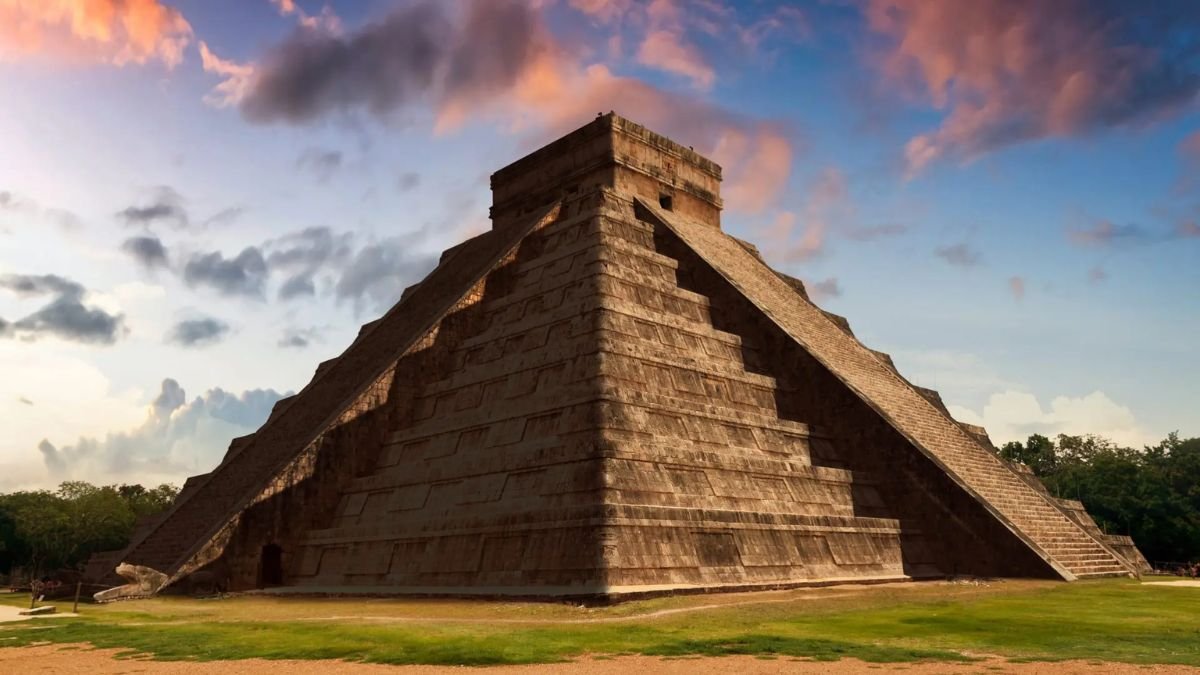
El Castillo, also known as the Temple of Kukulkán, is one of the most iconic monuments of the ancient Maya civilization. Situated in the heart of the Yucatán Peninsula, this pyramid has fascinated historians, archaeologists, and tourists alike for centuries. While its striking design and grandeur capture immediate attention, the true marvel lies in its precise alignment with celestial events. Among these, the equinox shadow phenomenon stands out as an extraordinary testament to the Maya’s understanding of astronomy. Twice a year, during the spring and autumn equinoxes, a shadow resembling a serpent appears to descend the pyramid’s staircase, blending architecture, science, and mythology in a single, breathtaking display.
The Maya and Their Celestial Knowledge
The Maya were among the most advanced civilizations in pre-Columbian America, particularly in their study of the skies. They observed the movements of the Sun, Moon, planets, and stars with remarkable accuracy. This knowledge was not merely theoretical; it guided agriculture, ritual life, and urban planning. Solar cycles were particularly important because they dictated the agricultural calendar, marking optimal times for planting and harvesting crops. By aligning their temples with celestial events, the Maya created structures that functioned as both religious centers and astronomical instruments, recording cosmic cycles in stone.
The Design of El Castillo
El Castillo is a nine-tiered pyramid standing approximately 79 feet tall, with a square base and four staircases facing each cardinal direction. Each staircase contains 91 steps, and when combined with the platform at the top, the total reaches 365 steps—one for each day of the solar year. This numerical precision reflects the Maya’s sophisticated understanding of time and their ability to translate it into architecture. The pyramid’s proportions and orientation were carefully calculated to interact with the Sun during equinoxes, producing the illusion of a descending serpent along the northern staircase.
The Equinox Shadow Phenomenon
Twice a year, around March 20 and September 22, the equinoxes mark the moments when day and night are nearly equal in length. At these times, sunlight strikes the northwest corner of El Castillo’s northern staircase in such a way that triangular shadows form along the edges of the pyramid’s terraces. These shadows create a series of interlocking triangles that appear to move downward, culminating at the stone serpent heads carved at the pyramid’s base. This striking visual effect is widely interpreted as the descent of Kukulkán, the feathered serpent deity, returning to the Earth to bless the people.
How the Maya Achieved This Alignment
Achieving the equinox shadow required more than intuition; it demanded careful observation over generations. Maya astronomer-priests meticulously recorded the Sun’s rising and setting positions throughout the year, noting subtle changes along the horizon. These observations informed the pyramid’s orientation, the slope of its terraces, and the positioning of staircases. The result is an architectural marvel in which sunlight and shadow converge precisely at the right time, creating a moving image that integrates art, science, and spirituality. This precision demonstrates that the Maya were not only skilled builders but also highly sophisticated astronomers.
Kukulkán: The Feathered Serpent
The serpent shadow carries deep cultural significance. Kukulkán was a central figure in Maya mythology, associated with creation, fertility, and renewal. By designing the pyramid to simulate Kukulkán’s descent, the Maya reinforced their religious beliefs through an awe-inspiring natural phenomenon. This alignment between human construction and celestial movement exemplifies the Maya philosophy that the cosmos and human society were deeply interconnected. Witnessing the shadow descend would have been a powerful communal experience, emphasizing harmony between humans, nature, and the divine.
The Broader Purpose of Solar Alignments
El Castillo’s equinox phenomenon was not merely a spectacle; it served practical, ceremonial, and social purposes. Solar alignments marked key agricultural events, guiding the timing of planting and harvesting. Ceremonial events synchronized with solar cycles fostered social cohesion, as communities gathered to observe, celebrate, and honor the Sun and Kukulkán. These alignments also reinforced the authority of priestly leaders, who interpreted celestial events and guided societal rituals, legitimizing their spiritual and political roles.
Observing the Phenomenon Today
Modern visitors to Chichén Itzá can still witness the equinox shadow in action. Thousands of people gather on the pyramid’s grounds to see the sunlight descend the staircase, a testament to both ancient ingenuity and enduring cultural fascination. While modern technology allows us to calculate and predict the phenomenon with precision, experiencing it firsthand evokes the awe the Maya likely felt centuries ago. This phenomenon continues to inspire curiosity, bridging the gap between past and present.
Comparisons With Other Mayan Structures
El Castillo is part of a broader tradition of solar observatories in the Maya world. Other structures, such as those at Uxmal and Dzibilchaltún, also demonstrate precise alignments with solar events. However, the dramatic serpent shadow at Chichén Itzá remains unique in its scale and visual impact. Comparing these structures highlights the Maya’s deep commitment to integrating astronomy with architecture, showing regional variations in technique while maintaining a shared understanding of celestial cycles.
The Science Behind the Shadow
From a scientific perspective, the equinox shadow demonstrates advanced geometric knowledge. The interplay of sunlight and terrace edges creates an illusion of movement, which requires precise angles and calculations. The Maya achieved this without telescopes or modern instruments, relying on careful long-term observation and accumulated empirical knowledge. This accomplishment underscores their ability to translate natural phenomena into predictable, repeatable architectural effects—a feat that continues to fascinate scientists and engineers today.
Cultural Significance and Symbolism
The shadow of Kukulkán descending El Castillo is more than an architectural curiosity; it is a profound cultural symbol. It represents the connection between humans and the cosmos, the cyclical nature of life, and the authority of sacred knowledge. By embedding this phenomenon into a public monument, the Maya created a lasting visual and spiritual experience that communicated power, reverence, and cosmic awareness to all who witnessed it.
Preservation and Legacy
Chichén Itzá, including El Castillo, has been designated a UNESCO World Heritage Site, ensuring its protection for future generations. Preserving the equinox shadow phenomenon is not only about protecting architecture but also about honoring the intellectual and spiritual achievements of the Maya. Archaeologists continue to study the site to better understand the methods used to achieve such precise alignments, offering insights into pre-Columbian science, art, and religion.
Lessons From the Maya
El Castillo’s equinox shadow teaches us about the integration of observation, creativity, and spirituality. The Maya did not view science and religion as separate; instead, they used their understanding of the Sun to guide daily life, agriculture, and ritual practice. This holistic approach challenges modern assumptions about ancient knowledge and emphasizes the value of careful observation, patience, and respect for natural cycles.
Conclusion
The equinox shadow at El Castillo stands as a timeless testament to the Maya’s astronomical mastery and cultural ingenuity. By designing a structure that aligns perfectly with the Sun, the Maya transformed stone into a dynamic instrument of both science and spirituality. The descending serpent captures the imagination, teaching us about cosmic order, communal experience, and the enduring power of observation. Even today, as sunlight traces its path down the pyramid’s stairs, it illuminates a civilization that harmonized architecture, astronomy, and myth into one unforgettable spectacle.
Leave a Reply