
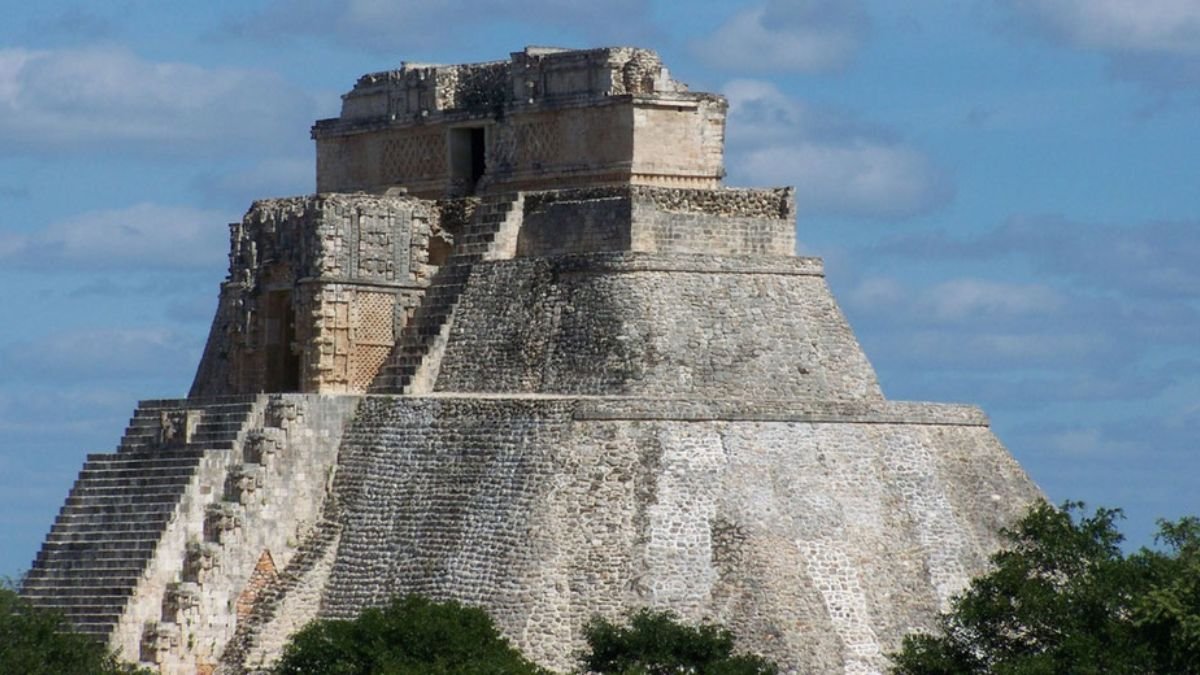
Mayan astronomy stands as one of the most sophisticated scientific traditions of the ancient world. Long before the invention of telescopes or modern instruments, the Maya developed an advanced understanding of the Sun, the Moon, planets, and stars through careful observation of the sky. For them, astronomy was not a separate science but a vital part of daily life, religion, agriculture, and governance. The movements of celestial bodies guided planting seasons, religious ceremonies, royal decisions, and even warfare. By studying how the Maya observed the Sun and sky, we gain insight into a civilization that blended science, spirituality, and mathematics into a remarkably accurate system of knowledge.
The Maya Civilization and Their View of the Cosmos
The Maya civilization flourished in Mesoamerica, covering present-day southern Mexico, Guatemala, Belize, Honduras, and El Salvador. Living in a region of dense jungles and varied climates, the Maya depended heavily on seasonal cycles for survival. This dependency pushed them to observe the heavens closely. The Maya believed the cosmos was layered, consisting of the heavens above, the earthly realm, and the underworld below. Celestial bodies were considered living entities or gods whose movements directly influenced human fate. This worldview motivated generations of Maya astronomers to record and predict celestial events with extraordinary precision.
The Importance of the Sun in Mayan Astronomy
Among all celestial bodies, the Sun held the most critical role in Mayan astronomy. The Maya saw the Sun as a powerful deity associated with life, growth, and authority. Its daily journey across the sky symbolized order and continuity, while its seasonal changes marked the rhythm of agricultural life. By tracking the Sun’s rising and setting points throughout the year, the Maya could identify solstices and equinoxes. These solar events helped them determine the ideal times for planting maize, their staple crop, and scheduling major religious ceremonies that honored solar gods.
Solar Observations and Architectural Alignments
One of the most impressive aspects of Mayan astronomy is how solar knowledge was embedded into architecture. Many Maya temples, pyramids, and ceremonial centers were deliberately aligned with the Sun’s movements. Structures such as El Castillo at Chichén Itzá demonstrate this perfectly. During the equinoxes, sunlight creates the illusion of a serpent descending the pyramid’s staircase, symbolizing the feathered serpent deity Kukulkán. These alignments were not accidental. They required generations of observation and careful planning, proving that Maya astronomers understood the Sun’s annual path with remarkable accuracy.
Tracking Time Through the Sun
The Maya developed several calendar systems, many of which were closely tied to solar observation. The Haab’, a 365-day solar calendar, mirrored the length of the solar year with impressive precision. Although it lacked leap years, it remained accurate enough for agricultural and ceremonial planning. By combining solar observations with mathematical calculations, the Maya ensured that their calendar stayed aligned with seasonal changes. This ability to track time using the Sun reinforced the idea that astronomy was deeply woven into everyday Maya life rather than being limited to elite scholars.
Studying the Sky Beyond the Sun
While the Sun was central, Mayan astronomers also paid close attention to the broader sky. They tracked the Moon’s phases to predict eclipses, which were considered powerful and often ominous events. Eclipses were recorded in Maya codices and monuments, showing a deep understanding of lunar cycles. The Maya also observed planets, particularly Venus, which they associated with war, sacrifice, and royal power. Venus’s cycles were charted so carefully that Maya calculations of its movement rival the accuracy of modern measurements.
Venus and Its Special Significance
Venus occupied a unique place in Mayan astronomy. The Maya recognized its appearance as both the Morning Star and the Evening Star and understood that these were the same celestial body. They calculated Venus’s synodic cycle with extraordinary precision and used it to plan important events. Wars, coronations, and rituals were often scheduled based on Venus’s position in the sky. The Maya believed that Venus’s movements carried powerful omens, making its study both a scientific and spiritual practice.
The Role of Maya Astronomer-Priests
Astronomy in Maya society was primarily the responsibility of priest-astronomers. These individuals were highly educated and held great influence. They observed the sky nightly, recorded celestial movements, and interpreted their meanings for rulers and the general population. Their knowledge was passed down through generations, ensuring continuity and refinement of astronomical records. By combining observation with mythology, priest-astronomers acted as intermediaries between the heavens and the human world, reinforcing social order and religious authority.
Tools and Methods Used to Study the Sky
Despite lacking modern instruments, the Maya developed effective methods for studying the sky. They relied on naked-eye observation, using fixed points on the horizon, such as mountains or constructed markers, to track celestial movements. Buildings themselves often served as observational tools, framing the rising or setting of the Sun and planets at specific times of the year. Over centuries, consistent observation allowed the Maya to refine their predictions, demonstrating that patience and precision can rival advanced technology.
Recording Astronomical Knowledge
Mayan astronomical knowledge was recorded in stone carvings, murals, and codices made from bark paper. These records included dates, celestial events, and ritual instructions linked to astronomical cycles. Although many codices were destroyed during the Spanish conquest, surviving examples like the Dresden Codex reveal detailed tables for solar and planetary movements. These texts confirm that Mayan astronomy was systematic, mathematical, and deeply analytical, rather than purely symbolic or mythological.
Astronomy and Agriculture
The practical benefits of Mayan astronomy are most evident in agriculture. Accurate solar observations allowed farmers to anticipate rainy and dry seasons, reducing the risk of crop failure. By aligning agricultural activities with celestial cycles, the Maya maximized productivity in a challenging environment. This close relationship between sky and soil highlights how astronomy directly supported survival and prosperity in Maya society.
Religious and Cultural Impact of Sky Studies
Astronomy also shaped Maya religion and culture. Celestial events were seen as messages from the gods, requiring ceremonies, offerings, or sacrifices. Temples dedicated to solar and sky deities served as both religious centers and observatories. Through rituals aligned with celestial cycles, the Maya reinforced their connection to the cosmos and maintained balance between the human and divine realms.
Accuracy and Legacy of Mayan Astronomy
Modern scientists continue to be impressed by the accuracy of Mayan astronomical calculations. Their estimates of the solar year, lunar cycles, and planetary movements closely match modern values. This precision challenges outdated assumptions that ancient civilizations lacked scientific rigor. Instead, Mayan astronomy demonstrates that careful observation, mathematical skill, and long-term record-keeping can produce highly reliable knowledge.
Conclusion
Mayan astronomy represents a remarkable achievement in human history. Through careful study of the Sun and sky, the Maya created a system that guided agriculture, religion, politics, and daily life. Their ability to predict celestial events without modern tools speaks to their intellectual sophistication and deep respect for the natural world. By understanding how the Maya studied the Sun and sky, we not only appreciate their scientific accomplishments but also recognize the enduring human desire to find meaning and order in the cosmos.
Leave a Reply