
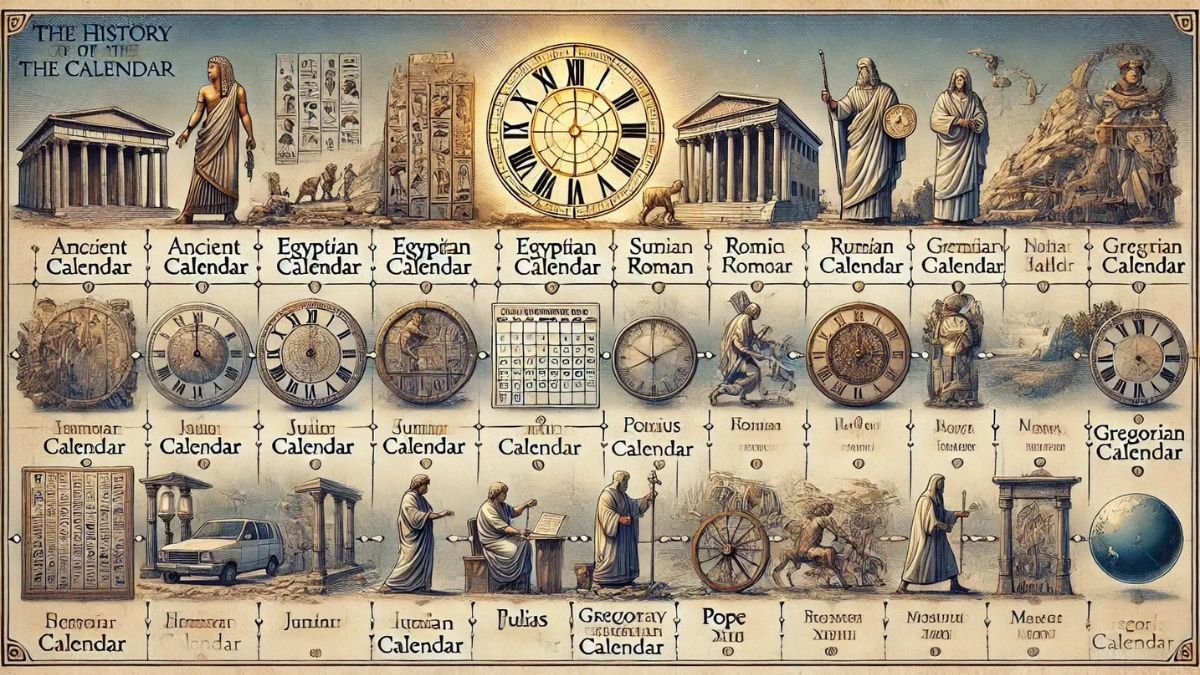
Long before clocks ticked on walls or calendars hung on doors, humanity looked upward to measure time. The Sun, constant yet ever-changing in its movement across the sky, became the first and most reliable timekeeper for ancient civilizations. Its rising and setting shaped daily life, while its seasonal shifts guided farming, rituals, and social order. For early humans, understanding the Sun was not merely a scientific pursuit; it was a matter of survival. By carefully observing sunlight and shadows, ancient cultures across the world developed calendars that structured their societies and connected earthly life with the rhythms of the cosmos.
Observing the Sun: The Birth of Timekeeping
The earliest human societies lived in close harmony with nature. Hunters, gatherers, and early farmers quickly realized that the length of days changed throughout the year. Summer brought long, warm days, while winter shortened daylight and chilled the land. These observations formed the foundation of solar timekeeping. People noticed that the Sun did not rise or set in the same position every day and that its path across the sky shifted gradually over months.
Through patient observation, ancient cultures began marking these changes using simple tools such as stones, sticks, or markings on the ground. Shadows cast by the Sun revealed patterns that repeated annually. Over time, these patterns were recognized as cycles, allowing early societies to predict seasonal changes. This ability transformed human life, enabling planning for planting, harvesting, migration, and ceremonial events.
The Solar Year and the Changing Seasons
At the heart of solar calendars lies the solar year, the time it takes for the Earth to complete one orbit around the Sun. Although ancient people did not understand this in modern astronomical terms, they were keenly aware of the repeating seasonal cycle. The Sun’s highest point in the sky marked the peak of summer, while its lowest arc signaled winter’s arrival.
These seasonal markers were crucial for agriculture-based societies. Farmers needed to know when floods would arrive, when rains would fall, and when frost might threaten crops. By tracking the Sun’s movement, ancient cultures divided the year into meaningful segments that aligned with natural events. This division gave rise to calendars that were deeply practical, rooted in the everyday needs of the community.
Solstices and Equinoxes: Sacred Turning Points
Among the most significant solar events observed by ancient cultures were the solstices and equinoxes. The solstices marked the longest and shortest days of the year, while the equinoxes represented moments when day and night were nearly equal in length. These events served as anchor points within solar calendars, offering reliable reference moments that occurred year after year.
Many civilizations imbued these solar turning points with spiritual meaning. The summer solstice often symbolized abundance, fertility, and the Sun’s greatest power. In contrast, the winter solstice represented rebirth and renewal, as the days slowly began to lengthen again. Equinoxes frequently symbolized balance and transition. Festivals, rituals, and ceremonies were organized around these solar milestones, reinforcing their importance in both practical and spiritual life.
Monumental Architecture as Solar Calendars
One of the most fascinating ways ancient cultures tracked the Sun was through monumental architecture. Structures were carefully designed and aligned to interact with sunlight on specific days of the year. These constructions served as massive, enduring calendars carved into the landscape.
Stone circles, temples, and pyramids often aligned with sunrise or sunset during solstices or equinoxes. When sunlight passed through an opening or illuminated a particular stone or chamber, it signaled an important moment in the solar year. These architectural calendars required advanced knowledge of solar movement and long-term planning, demonstrating the sophistication of ancient observational astronomy.
Ancient Egypt and the Sun’s Annual Journey
In ancient Egypt, the Sun was central to both timekeeping and religious belief. The Egyptians observed that the annual flooding of the Nile coincided closely with specific solar events. This flood was essential for agriculture, depositing fertile soil along the riverbanks. By linking solar observation with the Nile’s behavior, Egyptian priests developed a solar calendar that supported one of the world’s earliest complex civilizations.
Their calendar divided the year into seasons associated with flooding, planting, and harvesting. Temples and monuments were aligned with the rising Sun, reflecting the belief that the Sun god governed both cosmic order and earthly life. For the Egyptians, tracking the Sun was a way to maintain harmony between the divine and the human world.
Mesoamerican Mastery of Solar Time
In Mesoamerica, civilizations such as the Maya demonstrated remarkable precision in solar observation. They carefully tracked the Sun’s position on the horizon throughout the year, constructing buildings that aligned perfectly with solstices and equinoxes. These alignments were not accidental but the result of generations of accumulated knowledge.
Solar calendars in Mesoamerica guided agricultural cycles, religious ceremonies, and political authority. Leaders often used their understanding of solar events to reinforce their legitimacy, presenting themselves as intermediaries between the heavens and the people. The Sun’s predictable movement became a symbol of cosmic order, mirrored in the structure of society itself.
The Sun in Ancient Asian Calendars
Across Asia, solar observation played a key role in shaping calendars and cultural traditions. In ancient China, scholars carefully studied the Sun’s movement to define seasons and regulate agricultural activities. Solar terms were established to mark changes in climate, guiding farmers on when to plant and harvest.
These solar markers were integrated into a broader philosophical understanding of balance and harmony. The Sun’s journey was seen as part of a larger cosmic rhythm, influencing not only farming but also health, governance, and moral order. Solar calendars thus became tools for aligning human behavior with the natural world.
European Traditions and Solar Festivals
In ancient Europe, solar calendars were deeply intertwined with community life and seasonal celebration. Prehistoric monuments and later cultural traditions reflected careful attention to the Sun’s annual cycle. Solstice festivals marked key transitions, bringing communities together to celebrate light, fertility, or survival through winter.
These celebrations were more than symbolic; they reinforced collective memory and agricultural knowledge. By observing the Sun and commemorating its milestones, communities passed down essential information across generations. The calendar became a living tradition, preserved through ritual, storytelling, and shared experience.
From Observation to Organization: Calendars as Social Tools
As societies grew more complex, solar calendars evolved from simple observational tools into systems that organized social life. Calendars regulated work schedules, religious observances, taxation, and governance. Knowing the date was not merely about tracking time; it was about maintaining order.
Solar calendars provided predictability in an unpredictable world. They allowed leaders to plan, priests to schedule ceremonies, and farmers to prepare for seasonal changes. By anchoring human activity to the Sun’s steady rhythm, ancient cultures created a sense of continuity and stability that supported long-term societal development.
Challenges and Adjustments in Solar Calendars
Despite their accuracy, solar calendars were not without challenges. The solar year does not divide evenly into whole days, leading to gradual discrepancies over time. Ancient cultures recognized this issue and developed methods to adjust their calendars, adding extra days or modifying cycles to maintain alignment with the Sun.
These adjustments reflect a deep understanding of time as a dynamic concept rather than a fixed measure. The willingness to revise calendars shows that ancient societies were attentive observers, constantly refining their systems to better match celestial reality.
The Enduring Legacy of Solar Calendars
The influence of ancient solar calendars extends into the modern world. Many contemporary calendars still rely on the solar year and preserve elements first identified by ancient observers. The concepts of solstices, equinoxes, and seasonal divisions remain central to how we understand time today.
Beyond practical timekeeping, solar calendars remind us of humanity’s long relationship with the sky. They represent a shared heritage of curiosity, observation, and adaptation. Across continents and cultures, people independently turned to the Sun, finding in its steady light a guide for life on Earth.
Conclusion: The Sun as Humanity’s Eternal Guide
Ancient cultures did not merely use the Sun to create calendars; they built entire worldviews around its movement. By observing the Sun’s daily path and annual cycle, early societies transformed chaos into order and uncertainty into predictability. Solar calendars allowed humanity to synchronize with nature, fostering agriculture, culture, and community.
These early efforts reveal a profound respect for the natural world and an impressive capacity for long-term observation and understanding. Even today, as technology measures time with atomic precision, the Sun continues to shape our days, seasons, and years. In this way, the ancient practice of solar timekeeping lives on, reminding us that our modern sense of time is rooted in humanity’s earliest gaze toward the sky.
Leave a Reply